
Use PTFE Tape on Brass Only When the Pipe Thread and Service Permit It
HGW Hydraulics on Apr 30th 2024
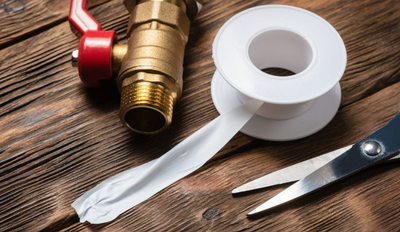
PTFE thread-seal tape can help seal and lubricate a brass tapered pipe connection. It is not a universal treatment for every brass thread. The first decision is whether pressure is sealed along the threads or at a separate ferrule, flare, washer, gasket, cone, or O-ring.
Identify the connection before opening the tape roll
NPT and other specified tapered pipe threads develop interference as they tighten and normally use an approved sealant to close the helical leak path. Parallel threads such as many BSPP arrangements depend on another surface. SAE 45-degree flare, JIC 37-degree flare, compression, ORB, and ORFS connections do not seal at their straight retaining threads.
Record the standard, size, material, fluid, pressure, temperature, and manufacturer instructions. A brass body and male thread do not prove that tape belongs on it.
Select tape from documented service approval
PTFE is chemically resistant in many services and reduces friction during assembly, but tape construction, density, thickness, pigment, lubricant, and certification vary. Potable water, natural gas, oxygen, food, chemical, and high-purity work can require listed or specifically cleaned products.
Color is often used as an industry identifier, but it is not a substitute for reading the label and approval. A yellow roll is not automatically authorized for every fuel gas, and green color alone does not make a tape safe for oxygen. Oxygen service requires dedicated material, cleaning, assembly, and regulatory controls.
Nickel-pigmented or other specialty tapes may be marketed for stainless threads, but the fitting and service instructions should approve them. Do not transfer that choice to brass from color alone.
Prepare and wrap the male tapered thread cleanly
Inspect male and female threads for cracks, deformation, corrosion, and cross-threading. Remove incompatible old sealant without scoring the part. Keep tape away from the first complete thread and bore so fragments are less likely to enter the system.
Wrap in the direction that will tighten with the male thread when viewed from its end, normally clockwise for a standard right-hand thread. Maintain flat controlled coverage; do not create a rope or large overhang. The permitted number of wraps depends on tape thickness, thread size, tolerance, and product instruction.
PTFE lubricates the joint, so the same wrench force can create deeper engagement than a dry assembly. Follow the component’s engagement or torque procedure and protect soft brass or thin female ports from expansion. More tape and more turns do not guarantee a better seal.
Keep tape away from compression and flare seals
In a compression fitting, the ferrule or ring grips the tube and seals against the body. Tape under the nut can interfere with proper assembly without contacting the fluid leak path. For a 37- or 45-degree flare, the mating cones create the seal; tape on the straight threads can contaminate the circuit and hide a damaged seat.
An adapter may have compression on one end and male NPT on the other. Treat each end separately: no tape at the compression nut, approved sealant at the NPT end if its instructions call for it.
ORB and ORFS use elastomeric boss or face seals. Bonded washers and gaskets have their own sealing surfaces. Do not apply tape to compensate for a missing seal or scratched face.
Do not invent a tape-and-paste combination
Some procedures authorize a particular tape, a liquid or paste sealant, or a defined combination. Others prohibit combinations because lubrication, cure, contamination, or over-engagement becomes difficult to control. Follow the sealant and equipment instructions rather than assuming two products provide double protection.
Check compatibility between sealant, brass alloy, fluid, temperature, cleaning process, and downstream components. A sealant rating does not set the pressure or temperature rating of the fitting assembly.
Diagnose a leak before adding more material
If a brass connection leaks, isolate pressure and identify whether seepage follows the thread, face, ferrule, flare, or O-ring. Inspect the female port; a cracked or stretched boss will not be repaired by rewrapping the male. Repeated assembly can wear tapered threads and soft brass.
The practical rule is narrow: use a verified PTFE tape on the compatible thread-sealing end, apply it cleanly under the approved method, and leave all other sealing surfaces unobstructed. That produces a traceable seal instead of a bundle of tape masking the wrong connection.