
Set Hydraulic Hose Pressure Margin Without Buying the Wrong Construction
Sep 15th 2022
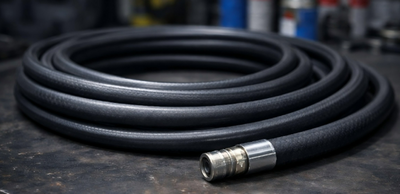
A higher pressure number does not automatically produce a safer hydraulic hose assembly. Safety comes from matching the verified pressure envelope and every other service condition to a qualified hose-and-fitting system. Selecting the highest available class can add stiffness, cost, routing problems, tooling requirements, and slow-moving inventory while leaving the real failure mechanism untouched.
The goal is not to remove engineering margin. It is to apply the margin required by the equipment design, hose standard, manufacturer, duty cycle, and risk assessment without using pressure rating as a substitute for a complete specification.
Build the pressure envelope from operating evidence
Start with more than a nominal pump setting. Record steady working pressure, relief setting, transient peaks, frequency and duration of impulses, suction or vacuum exposure, and the conditions under which readings were taken. A gauge that averages rapid events may not reveal short spikes, so diagnostic instrumentation and sampling rate should be appropriate to the machine.
Identify every mode: cold start, loaded travel, tool stall, cylinder end-of-stroke, rapid valve closure, regeneration, attachment changes, and service procedures. An intermittent event may control the hose even when the machine spends most of its time at much lower pressure.
The finished assembly working-pressure rating must meet the required design basis at the applicable temperature. Burst pressure is a qualification or failure value and must never be used as an allowable operating pressure. Proof testing, when specified, does not convert burst or proof pressure into a new working rating.
Find the lowest-rated part of the assembly
A hose label alone does not rate an assembly. Hose, coupling, stem, ferrule, adapter, flange, swivel, O-ring, crimp dimension, and assembly method all participate. The completed product is limited by its least capable qualified component and by any manufacturer derating that applies to temperature or service.
Mixing a high-pressure hose with an unapproved fitting does not preserve the hose rating. The coupling must be intended for that hose construction and installed with the specified tooling, die, crimp diameter, insertion depth, preparation, and inspection. A distributor or maintenance shop should retain the applicable assembly data and identification.
Port geometry also matters. JIC, ORFS, ORB, NPT, BSP, metric tube, and flange connections seal differently and have size-specific limitations. Adapters introduced only to make a heavy hose fit can add leak points and side load.
Pressure class changes physical behavior
Higher capability often requires additional or different reinforcement. That may change outside diameter, minimum bend radius, weight, flexibility, impulse performance, cover, and compatible coupling series. These changes are not defects, but they can make an unnecessary pressure class a poor mechanical fit.
A stiff assembly routed through the same space as a more flexible hose may be forced below minimum bend radius. Extra mass can increase movement and loading near the coupling. A larger outside diameter may interfere with clamps, guards, reels, articulating joints, or neighboring lines. These conditions can shorten life even though the printed pressure rating is higher.
Inside diameter must still support flow. Pressure class and hose dash size are different decisions. Choosing a physically smaller bore to obtain a desired rating can increase velocity, pressure loss, heat, noise, and energy use. Choosing an oversized hose can add volume, weight, cost, and routing difficulty. Size should be calculated from flow and system requirements, then checked against the selected construction.
Fluid and temperature can override the pressure decision
Tube, cover, seals, and fittings need compatibility with the transported fluid and external environment. Petroleum hydraulic oil, water-glycol, phosphate ester, fuel, coolant, compressed air, and chemicals can require different materials or special precautions. A hose with ample room in its pressure rating can still fail through chemical attack.
Use actual fluid and ambient temperature ranges, including radiant heat, winter startup, and localized exhaust exposure. Published ratings may depend on temperature and fluid. Sleeve or shielding may manage an external hazard, but it should not be used to excuse a hose whose basic temperature capability is wrong.
Vacuum, permeation, fire resistance, electrical conductivity, antistatic behavior, abrasion, ozone, UV, and pinhole containment may also be selection requirements. None is implied by a large pressure value.
Calculate the operational cost of excess construction
The purchasing difference is the easiest cost to see. On a fleet, however, a premium hose used everywhere can also require more shelf space, higher working capital, different fittings, additional crimp dies, skiving equipment, updated procedures, and training. Slow-moving high-pressure stock may age while common service sizes run short.
Installation cost can rise when heavy hose needs more support or two technicians to route it safely. If a tight envelope forces a longer route or additional elbows, the system gains more components and potential maintenance points. When a field replacement no longer matches clamps or guarding, the unplanned redesign can exceed the hose-price difference.
Standardization can still be valuable. One hose family may cover several applications and reduce part numbers, provided the full range of uses has been reviewed. The correct comparison is total qualified inventory versus total service need, not the lowest unit price versus the largest pressure number.
Compare candidate constructions in the installed envelope before standardizing. A useful review places pressure and temperature capability beside inside diameter, outside diameter, bend radius, mass, coupling series, tooling, cover, fluid approval, stock status, and expected annual use. This exposes a common purchasing mistake: two hoses may both pass the pressure requirement while only one fits the clamps, movement, and shop process already qualified for the machine.
Do not let rating replace inspection
An unnecessarily high rating can create a false belief that the assembly is resistant to every failure. It is not protection against abrasion, kink, twisting, hot surfaces, incompatible fluid, corroded fittings, damaged cover, poor crimping, or an incorrectly identified port.
Operators and maintenance teams should inspect by condition and service rule, regardless of margin. Leakage, exposed reinforcement, crushed sections, severe cover damage, pulled fittings, blistering, hard or cracked hose, and movement at the coupling require controlled evaluation. Never search for a pinhole leak with a hand; isolate stored hydraulic energy before service.
Overspecification does not by itself make a hose more likely to burst, and a properly qualified higher-rated assembly may work well. The risk appears when the larger number hides a mismatch elsewhere or changes installation behavior. Avoid absolute claims in either direction.
Use a selection record that can be repeated
For each assembly, record:
- hose inside diameter and required flow;
- finished length, orientation, routing, movement, and bend allowance;
- continuous pressure, surge data, impulse duty, and vacuum;
- fluid name and concentration, fluid temperature, and ambient exposure;
- hose construction and cover requirements;
- connection standard, size, sealing method, material, and orientation at each end;
- qualified fitting family, crimp or assembly instructions, and inspection result;
- applicable OEM, hose-manufacturer, or engineering requirement;
- delivery, labeling, cleanliness, test, and traceability needs.
This record also helps purchasing distinguish a real alternative from a part that merely has an equal or greater pressure rating.
Review field results instead of keeping a permanent guess
After installation, compare expected life with actual service. Repeated abrasion suggests a routing or protection problem. Heat damage points to temperature or flow losses. End failures may involve movement, assembly, or support. Random substitutions and mixed coupling systems can indicate an inventory-control issue.
If measurements show that a pressure class is unnecessary, engineering can approve a better-matched construction through a controlled change. If spikes exceed the original assumption, correct the system cause and update the hose requirement. A documented review preserves deliberate safety margin while removing cost and complexity that do not improve the application.
The right hydraulic hose is therefore not the weakest acceptable option or the strongest item in the catalog. It is the qualified assembly whose pressure capability, materials, geometry, routing, ends, delivery controls, and maintenance plan match the machine’s real operating envelope.