
Diagnose a Threaded Hydraulic Leak from Its Seal Geometry
HGW Hydraulics on Apr 28th 2026
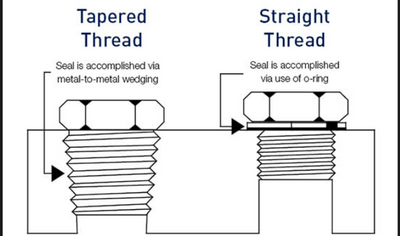
Under-tightening and over-tightening can both contribute to leakage, but torque is not the diagnosis. Hydraulic threads retain several different sealing geometries, and adding force at the wrong interface can permanently damage a port.
First identify what is supposed to contain pressure.
Inspect tapered pipe threads as a joint
NPT uses tapered thread interference plus the specified sealant practice. Engagement, thread form, port material and sealant determine the result.
PTFE tape or liquid/paste sealant must be compatible with the fluid and equipment. Use the product's application procedure rather than a universal number of wraps. Keep material off the first threads and out of the circuit as directed.
Too little engagement can leave a leak path; excessive torque can expand or crack a female port and deform threads. NPTF and other dryseal variants still require their governing assembly guidance.
Find the seal on parallel threads
ORB uses an O-ring at a machined boss port. BSPP arrangements may use a bonded washer, O-ring, captive seal or cone. ORFS and JIC also use straight retaining threads but seal at a face or flare.
Adding pipe-thread tape to these parallel threads does not repair the missing or damaged seal. Inspect groove, washer, cone, face, flare and spotface according to the connection.
Do not blame stainless as a soft metal
Overtightening can damage carbon steel, stainless, brass, aluminum and polymer ports in different ways. Stainless is not simply “softer”; it can gall and work-harden while other materials may yield or crack.
Use material- and product-specific tightening data. Lubricated and dry torque values are not interchangeable.
Trace the wet point before disassembly
Oil can travel from a hose crimp, tube crack, adjacent adapter or swivel and collect around threads. Clean under the safe procedure, observe from outside the spray path and identify the first wet location.
Then depressurize and inspect for crossed threads, seal damage, face scoring, corrosion, misalignment and port cracks. Replacing only an O-ring does not solve a burr that cuts it.
Correct the mechanism and retest
Renew seals and damaged components under the product procedure. Align shaped fittings without backing off a tapered joint; use an adjustable stud or swivel when orientation requires it.
Restore pressure safely and verify the complete connection. Record thread family, seal and tightening method for repeat maintenance.
The correct amount of tightening is the last step in a geometry-specific assembly. It should never be the first response to an unidentified leak.