
Judge Instrumentation Tube Connections by Qualified System Evidence
HGW Hydraulics on Mar 18th 2021
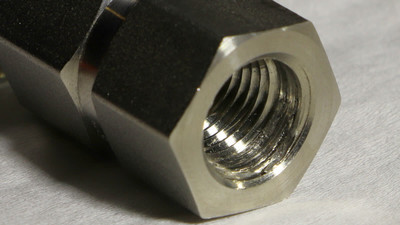
Rolled threads, cut threads, one ferrule, and two ferrules describe manufacturing or architecture. None of those labels proves by itself that an instrumentation connection is suitable for pressure, temperature, vibration, corrosion, or a critical process.
The fitting must be evaluated as a qualified system: body, nut, ferrule set, tube, material condition, machining, seal geometry, assembly method, and application evidence.
Instrumentation begins with measurement integrity
Tube systems connect pressure gauges, transmitters, analyzers, sample systems, manifolds, and control valves. A small leak can distort a measurement, admit contamination, expose personnel, or release process media even when the main pipe remains intact.
Define fluid, phase, pressure and temperature range, tube size and wall, material, cleanliness, corrosion, vibration, cyclic duty, fire or toxicity risk, code, and required testing. The most demanding condition may be startup, shutdown, purge, or cleaning rather than normal operation.
Thread rolling and cutting create different surfaces
Thread rolling cold-forms material between dies, which can create favorable grain flow, surface finish, work hardening, and compressive residual stress when the material and process suit it. Thread cutting removes material and can produce accurate forms across materials and geometries that are difficult to roll.
Performance depends on stock condition, thread design, die or tool condition, speed, lubrication, heat treatment, root geometry, finish, inspection, and the load path in the actual fitting. A test result for a high-strength bolt should not be applied automatically to a thin fitting nut or valve body.
Cut threads are not inherently defective, and rolled threads are not automatically stronger in every alloy or application. Verify dimensional class, surface condition, fatigue or proof data, and manufacturing controls for the product.
Ferrule architecture distributes grip and sealing
A single-ferrule system uses one ferrule to create the designed tube grip and seal. A two-ferrule system commonly uses a front ferrule for sealing and a back ferrule for grip and load control. Proprietary geometries vary within both categories.
Pressure rating and vibration performance depend on the whole connection, including tube hardness, wall thickness, outside-diameter tolerance, surface scratches, support, and assembly. Two ferrules do not guarantee a higher rating, and one ferrule does not limit a fitting to noncritical service.
Never combine nuts or ferrules from different product systems without documented compatibility. Similar parts can have different angles, hardness, or make-up travel.
Tube preparation controls the installed result
Use tube that meets the specified material, hardness, wall, ovality, and finish. Cut it square, deburr without thinning the wall, clean the bore, and remove sections with deep longitudinal scratches in the seal zone.
Insert fully and use the manufacturer’s turns, torque, presetting tool, or gap gauge. Tight-space convenience does not justify incomplete engagement. Support tubing so vibration and thermal movement are not concentrated at the nut.
For remake, inspect ferrule position, tube condition, body seat, and permitted tightening method. Repeated disassembly changes the contact surfaces.
Valve end connections require the same identification discipline
Needle, ball, check, metering, manifold, and other instrumentation valves may use integral compression ends, NPT, BSP, welded ends, flanges, or other standards. An integral tube end should match the fitting system and tube; a pipe-thread end needs its own sealant and engagement procedure.
Valve function, flow coefficient, pressure direction, stem packing, seat material, temperature, actuation, emissions requirement, and cleaning can control selection beyond the end connection.
Do not assume a valve from a fitting manufacturer uses the same tube-end design in every series. Check the exact part drawing.
Inspection evidence should follow the purchase
For critical service, specify material certificates, heat or lot traceability, dimensions, surface condition, pressure test, cleanliness, and any application qualification required. First-article or receiving inspection should sample the properties that protect the seal and grip, not rely on branding or polish.
If production shifts between cut and rolled threads, ferrule source, heat treatment, or tube material, treat the change through the controlled approval process. A cosmetic match is not evidence of equivalence.
Commission the measurement line as a system
Verify routing, supports, valve orientation, instrument isolation, purge path, leak testing, and accessibility. Use the approved test medium and pressure procedure; gas testing can store substantially more energy than liquid testing and may require special controls.
Record installed components and revisions so a later replacement reproduces the qualified connection. Inspect after thermal cycling or vibration if the procedure requires it, but do not invent a retorque step.
Instrumentation connection quality comes from matched parts and controlled evidence. Thread manufacture and ferrule count are useful design facts, but tube specification, assembly, valve interface, qualification, and traceability determine whether the measurement path remains contained and dependable.