
Compare Welded and Seamless Instrument Tubing from the Required Product Standard
HGW Hydraulics on Jan 9th 2024
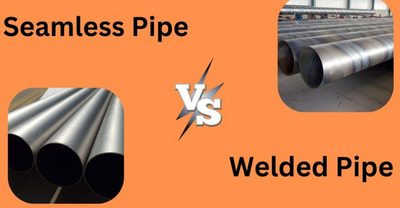
Welded and seamless tubing are manufacturing routes, not automatic rankings of quality or pressure. Either can serve instrumentation duty when the exact tube standard, dimensions, material condition, manufacturing controls, inspection, and fitting system meet the process requirements.
Begin with the service and governing code
Record fluid or gas, design and operating pressure, temperature, corrosion environment, vibration, cleanliness, surface requirement, tube OD and wall, and applicable piping code or customer standard. Pressure design should use the correct code method, allowable stress at temperature, dimensional tolerances, joint factors where applicable, corrosion allowance, and fitting limitations.
Do not apply a fixed statement that seamless carries twenty percent more pressure. A specific welded product may require a weld-related factor under one calculation, while another qualified specification and examination route may provide different treatment. The responsible design basis controls.
Evaluate welded tube as a complete product
Welded stainless tube starts from strip that is formed and joined longitudinally. This route can provide consistent wall and surface characteristics, efficient production, and useful cost advantages. The weld process, heat treatment, bead control, examination, dimensional tolerance, and corrosion behavior must meet the product specification.
Flat strip can be inspected before forming, but the finished weld and tube still require appropriate inspection. Surface appearance alone does not establish penetration, heat-affected-zone condition, or pressure suitability. If weld orientation matters for bending, fittings, or process exposure, state it on the fabrication record.
Evaluate seamless tube without assuming freedom from defects
Seamless tubing is formed without a longitudinal weld and avoids weld-seam-specific concerns. It is often selected for demanding pressure, temperature, cyclic, corrosion, or customer-specified service. It can also cost more and show dimensional variation from its production route.
The absence of a seam does not remove the need for material certification, dimensional inspection, surface examination, nondestructive testing where required, and traceability. Seamless is not inherently homogeneous in every metallurgical respect, and it is not automatically more corrosion resistant than welded tube of the same nominal alloy.
Specify dimensions, hardness, and surface condition
Instrumentation fittings depend on tube outside diameter, wall, roundness, hardness, and surface quality. Deep scratches, dents, seams, scale, and out-of-round tube can interrupt ferrule grip or create a leak path. Use the tube condition and hardness range accepted by the fitting manufacturer and project specification rather than a universal Rockwell limit copied to every alloy.
Standards such as ASTM A269 or A213 cover particular tubing products and service contexts; the purchase order should identify the applicable grade, dimensions, condition, testing, and supplementary requirements. A material name such as 304 or 316 is incomplete.
Match the tubing to its fitting system
Single- or twin-ferrule instrumentation fittings, DIN cutting rings, welded ends, flares, and other connections impose different preparation requirements. Cut square, deburr without damaging the sealing surface, remove particles, and follow the fitting instructions for insertion, presetting, tightening, inspection, and remake.
Tube and fitting materials should be compatible, and the fitting rating can limit the assembly before the tube wall does. Vibration supports, bend radius, thermal expansion, and tubing alignment affect the joint regardless of whether the tube is welded or seamless.
Choose through a documented comparison
Compare compliant welded and seamless candidates by code calculation, manufacturing standard, examination, corrosion environment, surface requirement, formability, availability, length, documentation, and total installed cost. Where the customer or equipment design specifies seamless, preserve that requirement. Where qualified welded tube meets the full design basis, its seam should not be rejected from assumption alone.
The defensible selection names the product standard, grade, condition, OD and wall, inspection, fitting system, and service limits. That record makes tube quality auditable and avoids turning one manufacturing feature into a universal performance claim.