
Treat Weld-On Hydraulic Fittings as Engineered Pressure Joints
HGW Hydraulics on Jun 4th 2025
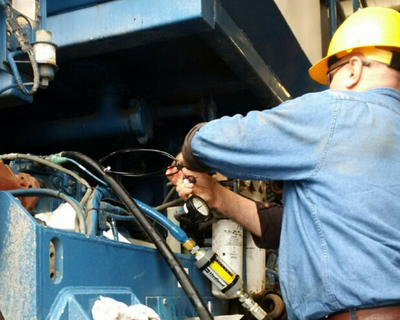
A hydraulic fitting should be welded only when its design and the governing fabrication specification permit it. Many threaded, flared, brazed, plated or heat-treated fittings are not intended for field welding. Starting with a purpose-made weld-on component prevents heat from being applied to a product whose material or geometry is unknown.
The joint is part of a pressure boundary. Work should be performed under the applicable code, drawing and qualified welding program rather than a universal eight-step recipe.
Establish engineering authority before preparing the joint
Confirm the fitting drawing, base material specification, wall thickness, pressure and temperature design, fluid, weld type and required examination. Identify coatings, seals, nearby hoses and internal passages that heat or spatter could damage.
Use a documented welding procedure specification where required, supported by procedure qualification and qualified personnel for the process and position. Repairing an existing machine may also require manufacturer or responsible-engineer approval. Do not weld a pressurized, oil-filled or inadequately cleaned component.
Make filler and process decisions from metallurgy
Gas tungsten arc, gas metal arc, shielded metal arc and other processes can produce acceptable joints when the procedure qualifies them. Popularity is not a selection basis. Access, thickness, material, cleanliness, heat input and required root control determine the process.
Filler choice is more specific than “steel rod for steel.” Base-metal grade, strength, corrosion environment, dilution, crack sensitivity and post-weld requirements all matter. Stainless work may require internal shielding or purge to protect the root. Aluminum needs its own alloy, oxide-control and procedure considerations.
Remove contamination without changing the fit
Drain, isolate and clean the component under an approved method. Residual hydraulic oil can create fire, toxic fume, porosity and lack of fusion. Remove coatings only to the extent required, and use tools that will not embed incompatible metal into stainless surfaces.
Prepare bevel, land, root gap and alignment to the drawing. Cap open ports against grinding debris while maintaining any ventilation required by the procedure. A wire brush cannot correct a mismatched wall or an unapproved joint geometry.
Control restraint, heat, and distortion
Fixture the fitting so its bore, port face and orientation remain correct, but avoid restraint that promotes cracking or pulls the branch out of alignment. Follow preheat, interpass temperature, travel, filler addition and pass sequence from the qualified procedure.
Protect machined threads and sealing faces. Excess heat can distort an O-ring groove, flare cone or port spotface even when the bead looks smooth. After cooling by the prescribed method, verify dimensions and wrench access as well as weld appearance.
Inspect to the acceptance criteria
Visual inspection can identify surface cracks, undercut, overlap, porosity, arc strikes and dimensional problems. It cannot prove that the root is fused or that no subsurface defect exists. Use penetrant, magnetic-particle, radiographic, ultrasonic or other examination when the governing requirement calls for it.
Repairs need an approved method and reinspection. Repeatedly grinding and rewelding a small fitting can alter wall thickness, metallurgy and port alignment.
Test without turning the circuit into a hazard
Pressure or leak testing should follow a written procedure with calibrated equipment, compatible test medium, exclusion zone and safe energy control. Hydrostatic testing generally stores less energy than a comparable pneumatic test, but it still requires rated plugs, restraints and controlled pressurization.
Define test pressure, hold time, temperature, acceptance and post-test cleaning from the governing design basis. Do not use the operating machine as the first proof test or inspect a suspected pressurized pinhole by hand.
Retain material identity, welder and procedure references, inspection results, repair history and test record. That documentation is what turns a welded adapter into an accountable hydraulic pressure joint.