
Specify Coolant Hose from Fluid Chemistry, Temperature, and Fitting Materials
HGW Hydraulics on Aug 4th 2022
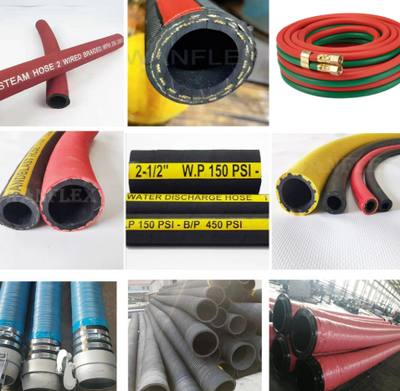
A line carrying engine coolant or process coolant should not be specified from a hydraulic-oil hose description alone. Water, glycol, inhibitors, contamination, and temperature cycling create a different compatibility problem from petroleum hydraulic fluid. The complete assembly has to be evaluated as a coolant component.
Begin with the actual coolant formulation
Record the coolant type, water-to-glycol concentration, additive package, maximum and minimum temperature, operating pressure, and maintenance interval. Also identify whether oil, fuel, cleaning chemicals, ozone, or outdoor weather can contact the hose cover.
The word “coolant” is not a complete material specification. Ethylene-glycol and propylene-glycol mixtures can use different inhibitor systems, and a concentration change can alter freezing protection, boiling behavior, and material exposure. Compatibility should come from the hose and seal manufacturer for the fluid as used, not from color or a general fluid name.
Select the tube and cover as separate surfaces
Many conventional hydraulic hoses use tube compounds chosen for oil resistance. A compound that performs well with petroleum oil may soften, swell, blister, or lose strength in long-term aqueous service. EPDM is widely used in coolant hose because it can suit hot water and glycol mixtures, while silicone is used in some high-temperature coolant applications. Neither name is a universal approval; construction, reinforcement, pressure rating, and the manufacturer’s fluid data still control.
The hose cover sees a different environment from the tube. Oil splash can damage some coolant-hose covers even when the inner tube is correct for glycol. Abrasion, radiant heat, UV, and tight routing also need their own protection.
Treat thermal cycling as an assembly issue
Coolant lines expand, contract, and change stiffness as equipment warms and cools. Check minimum bend radius at the cold condition, provide movement near the engine or heat exchanger, and keep the hose away from exhaust and sharp edges. Do not stretch the assembly between ports or use a fitting to pull a short hose into place.
Clamps, crimped ends, barbs, and threaded adapters must be qualified for the hose construction and duty. Retention that works on a low-temperature utility line may not remain appropriate through repeated hot cycles and vibration.
Match fittings and seals to both sides of the exposure
Adapter selection involves more than choosing stainless steel. Confirm the coolant’s effect on the base metal, plating, brazed areas, O-rings, and any dissimilar-metal contact. Stainless can be helpful in wet or corrosive locations, while a properly finished carbon-steel fitting may be suitable in controlled service. JIC, ORB, NPT, BSP, or another connection can be used only when it matches the port and its sealing method.
For replacement work, record hose identification, coolant specification, temperature range, fitting ends, orientation, assembly length, and the failure location. That evidence separates a chemistry problem from abrasion, excessive heat, poor routing, or an incorrect end connection and supports a coolant line that is independently specified for the machine.