
Do Not Transfer Set Ferrules to New Instrumentation Tube
HGW Hydraulics on Jan 8th 2026
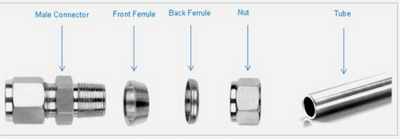
Instrumentation ferrules change shape when a tube fitting is first pulled up. That controlled movement establishes contact with the tube and fitting body. Once set, loose ferrules should not be removed and treated as new parts for another tube.
This rule must be distinguished from remaking a connection. Some fitting systems permit an already assembled tube end, with its original ferrules still set in place, to be disconnected and reconnected under a defined procedure.
Understand what the first pull-up changes
The nut drives the ferrule set against the fitting body and tube. Depending on the design, the front ferrule forms the seal while the back ferrule controls grip and load transfer. The contact bands and geometry are specific to that tube end and body system.
After assembly, the ferrules no longer have unused dimensions. Moving them to a fresh tube or reversing their order cannot reproduce the original controlled setup. Mixing a used ferrule with a different manufacturer’s body or nut adds another uncontrolled geometry.
Keep remake and ferrule reuse separate
A remake retains the original ferrules on the same tube and returns them to a compatible body under the manufacturer’s instructions. The procedure may specify a wrench position, resistance point, turn amount or inspection gauge. Permitted remake count and criteria vary.
Ferrule reuse means removing, loosening or transferring the set pieces and attempting another initial assembly. That should not be done unless an exact product instruction explicitly provides a qualified method. New ferrules are the normal choice for a new tube end.
Inspect the complete set tube end
Before a permitted remake, isolate pressure and examine tube alignment, corrosion, scratches, deformation and ferrule position. Look for cracked nuts, damaged threads and a body seat that was scored or contaminated. A fitting that leaked because the tube was forced sideways is not repaired merely by retightening.
Do not assume microscopic cracking from every first assembly, but do not rely on appearance alone where the procedure requires replacement. Evidence of over-pull-up, fretting, heavy wrench damage or unknown component identity justifies removing the connection from service.
Cut back tube only when the route still works
Creating a new end may require cutting behind all previous grip and seal marks. That changes tube length and can create tension, reduce insertion allowance or violate bend and support requirements. Confirm the revised route before cutting.
Prepare the new end squarely and cleanly, then install a complete new ferrule set belonging to the approved fitting family. If adequate tube length is unavailable, replace the tube rather than pulling it into alignment.
Preserve identity during service
Bag and label matching nuts and ferrules if a procedure requires temporary removal with an assembly. Keep protective caps on opened bodies and tube ends. Do not combine similar-looking components from maintenance trays.
The defensible rule is precise: never transfer previously set ferrules as if they were new; remake an intact original tube end only when its fitting-system instructions permit it and inspection confirms the entire connection remains serviceable.