
Identifying Metric Hydraulic Connections: DIN, JIS, BSP, and Komatsu
HGW Hydraulics on Nov 2nd 2021
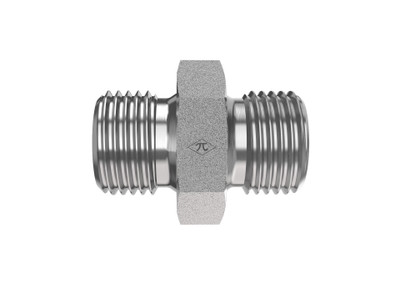
The label "metric fitting" is useful as a first clue, but it is not a complete connection identification. A technician working on imported equipment may encounter a DIN 24-degree tube connection, a JIS 30-degree flare, a Japanese 60-degree cone, a BSP parallel swivel, or an OEM-specific metric pattern. Several of those parts can have similar outside diameters while using different seats, pitches, and sealing methods.
For a U.S. buyer maintaining a mixed fleet, the practical issue is not whether the machine comes from a metric country. The issue is whether the replacement matches the thread and the sealing geometry on that exact port. A near match may start by hand and still damage the port or leak when pressure is applied.
Treat "metric" as a measurement clue, not a connection name
True metric threads are commonly described by nominal outside diameter and the distance between thread crests. M18 x 1.5, for example, identifies an 18 mm nominal diameter and a 1.5 mm pitch. Inch-based threads are often described by diameter and threads per inch. The two systems can produce dimensions that look close without being compatible.
BSP adds another source of confusion. BSP threads are derived from British inch standards, yet they are used extensively on equipment that otherwise uses metric dimensions. They are frequently grouped with foreign or metric fittings in a repair shop, but BSPP and BSPT must still be identified by their own thread form and sealing arrangement.
Connection identification therefore needs more than a caliper reading. Record four separate features:
- Thread outside diameter and pitch or threads per inch.
- Tapered or parallel thread form.
- Seat angle, cone, flare, O-ring, washer, or cutting-ring seal.
- Tube outside diameter, port style, and male or female configuration.
DIN tube connections dominate many European machines
DIN 2353 and ISO 8434-1 24-degree compression connections are common on European hydraulic equipment. The assembly normally combines a metric tube, nut, and cutting ring or another approved sealing element with a 24-degree fitting body. Light and heavy series components can share a general appearance while using different tube sizes, dimensions, and pressure capabilities.
Some modern 24-degree designs incorporate an elastomeric seal. That does not make every DIN component interchangeable. The tube series, fitting body, ring or seal, nut, and assembly instructions need to belong to the correct system.
Other European metric connections include 60-degree cone and 45-degree cone designs used in particular hose or equipment applications. The presence of a metric thread does not tell the technician which cone or tube end provides the seal.
JIS and Japanese equipment require seat verification
JIS fittings are widely found on machines manufactured in Japan and Korea. Depending on the application, the connection may use a 30-degree flare or a 60-degree cone. Komatsu equipment also commonly uses a metric-thread 30-degree flare style in mobile hydraulics.
Japanese tapered pipe threads may be associated with BSPT in service literature, but compatibility should be confirmed against the applicable standard and the actual parts. A male thread that lacks the required flare cannot seal correctly against a female swivel that depends on a conical seat. Thread engagement by itself does not prove that the sealing faces match.
When a replacement comes from a dismantled machine, do not identify it only by country of origin. Japanese, European, British, and North American connections can all appear on one piece of globally sourced equipment.
Inch flanges can appear beside metric hoses and tubes
Heavy equipment often mixes measurement systems. A machine may use metric tubing and hose ends while mounting a pump or valve with an SAE J518 Code 61 or Code 62 four-bolt flange. Those flange patterns are conventionally associated with inch sizes even when the equipment drawing also gives metric dimensions.
Global OEMs purchase pumps, cylinders, valves, motors, and attachments from multiple regions. A replacement component may be offered with alternate ports or shafts for different markets. The machine serial number, component model, port drawing, and parts manual are therefore stronger evidence than the manufacturer's home country.
Why global manufacturing uses both systems
Metric measurement is used by most industrial markets, and Europe and Asia rely heavily on metric tube, fitting, cylinder, and pump dimensions. The United States continues to use inch dimensions in many hydraulic products while also manufacturing vehicles, machinery, electronics, medical products, and exported equipment with metric features.
Canada and the United Kingdom also use mixed conventions in everyday and industrial settings. This is normal global manufacturing, not an exception. Suppliers and repair shops need to work in both systems because equipment does not change every connection when it crosses a border.
The decimal structure of the metric system makes conversions convenient: millimeters, meters, milliliters, liters, pascals, kilopascals, and bar scale by powers of ten. Convenience does not create interchangeability. A 19 mm tube is close to 3/4 inch, but close dimensions do not establish the same thread, wall thickness, fitting body, or working pressure.
A repeatable identification process prevents forced fits
Start by cleaning the connection so the thread and sealing face can be inspected without driving debris into the system. Measure the male thread outside diameter or female thread inside diameter, then use a pitch gauge for metric pitch and an appropriate gauge for threads per inch. Determine whether the thread is parallel or tapered.
Next, inspect where the seal is intended to occur. Look for a 24-degree cone, 30-degree flare, 60-degree cone, O-ring, bonded washer, cutting ring, or tapered thread. Measure the tube outside diameter and note whether the connection is a port adapter, tube fitting, hose end, swivel, or flange.
Photographs are useful when they show the thread, seat, seal location, and the part installed on the machine. A single outside view is usually insufficient. Record the equipment make, model, serial number, component manufacturer, and any stamped part number or port code. Those details help resolve fittings that share similar measurements.
Stocking parts for mixed metric and inch fleets
A maintenance operation with imported and domestic machines benefits from separating identification from inventory. Common repair sizes can be stocked based on actual usage, while low-frequency connections can be ordered from verified drawings or samples. Bins should identify the standard and sealing method, not use one broad "metric" label.
For repeat orders, retain the approved drawing, manufacturer cross-reference, material, finish, and revision. If an overseas production batch is used to replenish U.S. inventory, the sample approval and receiving inspection should verify the same thread, seat, dimensions, and markings as the accepted part. That record reduces the chance that a visually similar revision is placed into the same bin.
Match the connection, not the unit label
Metric hydraulic fittings are common because equipment supply chains are global, but global use has produced a family of standards rather than one universal metric connection. DIN, JIS, BSP, Komatsu, and SAE flange components can coexist on one machine. Accurate replacement depends on the thread, pitch, seat, seal, tube, and port together. Once those features are confirmed, the choice between metric and inch becomes a measurement detail instead of a guessing exercise.