
Aerospace Hydraulic Systems: Pressure, Temperature, and Design Limits
HGW Hydraulics on Aug 19th 2026
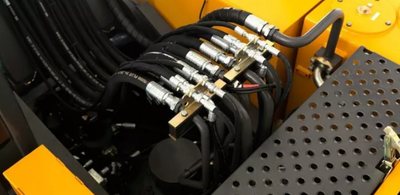
Aerospace hydraulic systems are built for work where compact components must move high loads with controlled motion. Aircraft and space-vehicle hydraulics can support flight control, steering, braking, door movement, and other systems where force, response, and weight all matter.
Because the environment is demanding, pressure and temperature are not small details. They influence material choice, line and fitting selection, fluid compatibility, seal behavior, actuator performance, and the overall design margin of the hydraulic system.
Common aerospace hydraulic applications
Hydraulic power is used across many aircraft functions. Typical applications include cargo doors, rudders, spoilers, landing gear, nose wheel steering, primary flight controls, emergency generators, and flap or slat drives.
Some specialty aircraft also use hydraulics for more demanding auxiliary equipment, such as gun drives, hydraulic-motor-driven fan heat exchangers, and bay-door actuation. These applications show why aerospace hydraulic systems must combine compact size with high force and predictable control.
Pressure requirements in aircraft hydraulics
Aircraft hydraulic pressures are often higher than ordinary industrial hydraulic applications. Many commercial aircraft systems operate around 3,000 PSI. Military aircraft hydraulic systems may operate from about 4,000 to 5,000 PSI.
Higher pressure helps produce the torque, force, and power needed from smaller and lighter actuators. That matters in aircraft because weight is always a design constraint, and hydraulic components must keep working while the aircraft is operating at altitude and under changing loads.
Temperature extremes and fluid compatibility
Aerospace hydraulic systems also face wide ambient temperature swings. Aircraft may encounter conditions well below zero and above 100 degrees F. Commercial aircraft can experience operating environments from about -65 to 160 degrees F, while military aircraft can face a wider range, from about -65 to 275 degrees F.
Those temperature ranges affect hydraulic fluid behavior, seal materials, hose and tube assemblies, fitting materials, and component clearances. A fluid that performs well at normal shop temperature may behave differently during cold starts, high-altitude exposure, or high-temperature duty cycles.
Design factors that must be considered together
Pressure and temperature are closely tied to other design concerns. Internal pressure, ambient pressure, material strength, operating speed, weight, and fluid compatibility all have to be reviewed together. A component cannot be selected only by thread size or connection style when the system must also survive high pressure and large temperature changes.
For fittings, hoses, tubes, seals, and adapters, the practical question is whether the part matches the pressure rating, temperature range, fluid type, vibration environment, and connection standard of the aircraft system. Aerospace hydraulics leave little room for mismatched materials or marginal ratings.
The core lesson is that pressure and temperature shape the entire hydraulic design. In aircraft systems, they influence not only the pump and actuator, but also the fluid, the connection hardware, the sealing materials, and the weight-sensitive layout around them.