
HGW Resources

HGW Blog

Practical guides for identifying hydraulic fittings, comparing connection styles, checking applications, reviewing materials, and finding relevant HGW product categories.

APPLICATIONS

Hydraulic Fitting Distribution: Connecting Global Supply to Local Demand

HGW Hydraulics on Oct 13th 2026

A hydraulic fitting may be a small part of a machine, but getting it from production to the point of use involves several businesses. Manufacturers, distributors, equipment builders, and maintenance teams each play a part in that journey. Global distribution brings those roles together, connecting the supply of fittings with the places where hydraulic equipment is built and maintained. Warehouse

Applications

Electro-Hydraulic Integration is Transforming Industrial Applications: Practical Buying Guide

HGW Hydraulics on Sep 17th 2026

Hydraulics has always been about power: moving heavy loads, holding high forces and working reliably in tough conditions. What's changing is the control. When you add electronic controls, sensors and software to hydraulic power, you get a system that is stronger, smarter, more efficient and easier to manage. This guide explains what electro-hydraulic integration is, why it matters and what to chec
Applications

How Tube Fittings Work in Aircraft Hydraulic Systems

HGW Hydraulics on Aug 25th 2026

Aircraft hydraulics depend on more than pumps and actuators. The system also needs a controlled path that carries fluid from the reservoir and pressure source to selector valves, manifolds, filters, accumulators, brakes, landing-gear actuators, flight-control actuators, and other hydraulic equipment. Tube fittings make those individual components and conductors function as one serviceable circuit.
Applications

Aerospace Hydraulic Systems: Pressure, Temperature, and Design Limits

HGW Hydraulics on Aug 19th 2026

Aerospace hydraulic systems are built for work where compact components must move high loads with controlled motion. Aircraft and space-vehicle hydraulics can support flight control, steering, braking, door movement, and other systems where force, response, and weight all matter. Because the environment is demanding, pressure and temperature are not small details. They influence material choice, l
Applications

Coordinate Overseas Fitting Production with U.S. Service Inventory

HGW Hydraulics on Jul 29th 2026

Factory geography does not determine whether a hydraulic fitting reaches a U.S. customer correctly and on time. Reliability comes from connecting one technical definition to manufacturing, inspection, international movement, local inventory and exception handling. An overseas factory and a U.S. warehouse can function as one supply system when their records and planning clocks agree. Freeze the par
Applications

Specify a Hydraulic Cylinder from the Load Path to the Port Connection

HGW Hydraulics on Jul 14th 2026

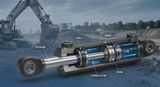
A hydraulic cylinder converts fluid pressure and flow into linear force and motion, but bore and stroke are not enough to specify one. The load path, mounting geometry, rod stability, speed, duty cycle, cushioning, seals, ports, environment, and safe load-holding method determine whether the cylinder will work reliably in the machine. Selection should begin outside the cylinder—with the moving str
Applications

Trace Aircraft Hydraulic Power from Reservoir to Actuator and Return

HGW Hydraulics on Jul 8th 2026

An aircraft hydraulic system converts stored fluid and mechanical input into controlled force at brakes, landing gear, flight-control surfaces and other functions. The architecture varies greatly by aircraft, so component identification should follow the approved schematic and maintenance data rather than a generic layout. Begin with fluid storage and pump inlet conditions The reservoir accommodat
Applications

Following Agricultural Fluid Power from Harvest to Handling and Processing

HGW Hydraulics on Feb 12th 2026

Food production uses fluid power across several distinct environments. Field machines work through dust, vibration, weather, and crop residue. Livestock equipment adds impact, manure, moisture, and frequent washdown. Handling and processing facilities may require different cleanliness, material, and documentation controls. Calling all of these uses “agriculture” can hide the reasons a connection s
Applications

Protecting Construction-Machine Hydraulic Connections by Failure Location

HGW Hydraulics on Feb 3rd 2026

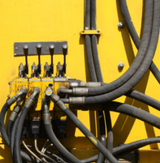
Construction equipment does not expose every hydraulic line to the same hazard. A boom hose flexes, a line under a chassis is struck by debris, a paver works near sustained heat, and an articulated joint combines movement with tight clearance. Effective protection starts by mapping where a hose or fitting can fail, then selecting routing, guarding, material, and inspection practices for that locat
Applications

Regionalize Construction Hydraulic Spares Without Fragmenting Part Control

HGW Hydraulics on Dec 2nd 2025

Construction equipment is supported through manufacturers, dealers, rental fleets, distributors and field repair shops. This network puts service close to jobsites, but it can also split demand across regions, machine generations and connection standards. Regional inventory helps only when every stocked item remains tied to a controlled machine and part definition. Map demand by machine and failur