
Trace Aircraft Hydraulic Power from Reservoir to Actuator and Return
HGW Hydraulics on Jul 8th 2026
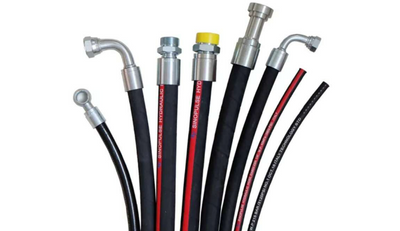
An aircraft hydraulic system converts stored fluid and mechanical input into controlled force at brakes, landing gear, flight-control surfaces and other functions. The architecture varies greatly by aircraft, so component identification should follow the approved schematic and maintenance data rather than a generic layout.
Begin with fluid storage and pump inlet conditions
The reservoir accommodates usable fluid, return flow and volume changes while supporting deaeration and thermal management. Pressurization, level indication, filtration and servicing arrangements are aircraft-specific.
Pumps create flow; pressure develops when that flow meets resistance and load. Engine-driven, electric or other pump arrangements may support normal, alternate or emergency operation. Inlet condition, fluid viscosity and contamination influence pump performance.
Follow pressure through valves and distribution lines
Control valves route flow toward a selected function, regulate or reduce pressure, sequence operations and isolate portions of the circuit. Relief devices limit pressure under defined conditions but do not replace correct load and control design.
Rigid tubing carries fluid through stable structure, while flexible hose accommodates specified movement, vibration or component connection. Fittings, clamps and bulkhead interfaces keep the conductors aligned and sealed. Aerospace part identity, material, orifice, finish and qualification are controlled; an industrial near-match is not acceptable because its thread appears similar.
Convert hydraulic energy at the actuator
Cylinders produce linear force for functions such as landing-gear movement, doors, brakes or control-surface mechanisms. Hydraulic motors create rotary motion where the aircraft design uses them. Position locks, load-holding features and feedback devices may be integrated around the actuator.
The piston, rod, bearings, seals and connected lines experience motion and cyclic load together. Leakage or drift must be diagnosed within that assembly rather than attributed automatically to one fitting.
Manage heat, return flow, and cleanliness
Returning oil carries heat and wear debris back toward filters, reservoir and conditioning components. Heat exchangers or other cooling arrangements keep fluid and nonmetallic materials inside their approved range. Filters and indicators support the cleanliness level required by sensitive valves and pumps.
Cold-soak viscosity and high-temperature degradation affect response, lubrication and leakage. Use only the hydraulic fluid and servicing equipment authorized for that aircraft.
Match every seal to the approved fluid family
O-rings, packing, hose liners, reservoir finishes and adhesives can be compatible with one aviation fluid family and unsuitable for another. Mineral, synthetic-hydrocarbon and phosphate-ester systems require their specified materials.
Do not select a seal from temperature alone or assume PTFE solves every compatibility problem. Geometry, extrusion gap, motion, pressure cycling and component approval remain part of the design.
Understand redundancy as a system function
Larger or more critical aircraft may use separated hydraulic systems, multiple pumps, accumulators or alternate actuation so a single failure does not remove the required function. Physical separation and isolation can be as important as adding another component.
Cargo doors, spoilers, rudders, nose-wheel steering, flap or slat drives and thrust reversers do not all receive identical redundancy. The approved aircraft design determines the consequence of each loss and the maintenance actions.
Component knowledge is useful when it preserves the flow path: reservoir to pump, controls and conductors to actuator, then conditioned return. For actual service, the current aircraft maintenance manual and illustrated parts data control every replacement and test.