HGW Resources

HGW Blog

Practical guides for identifying hydraulic fittings, comparing connection styles, checking applications, reviewing materials, and finding relevant HGW product categories.

Applications

Specifying Instrumentation Connections for Medical and Life Science Equipment

HGW Hydraulics on Apr 24th 2025

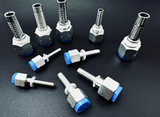
Medical and life science equipment can contain analytical instruments, gas and liquid controls, laboratory skids, utilities, diagnostic systems, bioprocess equipment, and manufacturing machinery. Their connections range from general pneumatic or hydraulic utilities to clean process paths and regulated device components. One fitting catalog cannot define every requirement. Selection starts by class
Applications

Hydraulic Connections Around Food Filling, Mixing, and Packaging Equipment

HGW Hydraulics on Apr 9th 2025

Food and beverage plants use hydraulics to clamp, lift, position, press, convey, meter, and move packaging equipment. The hydraulic circuit may sit beside mixers, fillers, cappers, labelers, conveyors, palletizers, and cleaning systems without contacting the product directly. That distinction matters. A stainless hydraulic fitting is not automatically a hygienic product-contact fitting. The equipm
Applications

Hydraulic Power on Drilling and Production Equipment: Fluid, Lines, and Maintenance

HGW Hydraulics on Jan 29th 2025

Hydraulic systems operate clamps, positioning devices, winches, top-drive or support functions, control valves, handling equipment, and other mechanisms across drilling and production sites. Their value is compact power transmission and controllable motion. Their risk is that high-pressure energy and contamination can move through a distributed network of lines and connections. Reliable service de
Applications

Specify Heavy-Lift Hydraulic Hose for Motion, Load, and Electrical Exposure

HGW Hydraulics on Jan 21st 2025

Hydraulic hose on lifting and material-handling equipment is both a pressure conductor and a moving machine component. Selection must cover the full duty: load-induced pressure, transients, articulation, ambient hazards, fluid, temperature, abrasion, electrical exposure and the way a failure could affect people or a suspended load. A hose family name is not enough. The exact hose, ends and assembl
Applications

Connection Checklist for Upstream Oil and Gas Hydraulic and Instrument Lines

HGW Hydraulics on Jan 16th 2025

Upstream oil and gas equipment uses hydraulic and instrumentation connections on drilling rigs, wellheads, control panels, production skids, chemical injection, safety systems, and mobile support equipment. The operating environments differ, but they share a need for correct service identification before a fitting is selected. A connection that carries clean hydraulic oil inside a panel is not spe
Applications

Wellhead Control Panel Connections: From Hydraulic Supply to Safe Valve Actuation

HGW Hydraulics on Jan 16th 2025

A wellhead control panel sends controlled hydraulic or pneumatic energy to surface and subsurface safety functions. Its tubes, fittings, valves, gauges, reservoirs, pumps, accumulators, and logic elements must preserve pressure and signal integrity while allowing safe isolation and testing. Selecting a fitting from thread size alone misses the panel’s real purpose. Each connection belongs to a cir
Applications

Protecting Hydraulic Connections on Mining Excavators, Loaders, and Water Equipment

HGW Hydraulics on Jan 8th 2025

Mining equipment combines high loads with dust, rock impact, vibration, weather, heat, wash water, and limited maintenance windows. A hydraulic hose that works on a clean power unit can fail quickly when it rubs a boom, is crushed by debris, or is pulled tight through articulation. Connection reliability begins with the machine’s motion and exposure. The fitting, hose, guard, clamp, and route shou
Applications

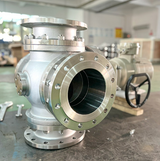
Specify Stainless Valves from Process Chemistry, Pressure Class, and Seat Design

HGW Hydraulics on Aug 29th 2024

A stainless valve is not selected from the body material alone. The ball, stem, seat, packing, seals, fasteners, end connections, actuator, and cavity all contact the process or environment in different ways. The valve must also perform its required shutoff, throttling, isolation, cleaning, and safety function. Write the process envelope first Record fluid or gas composition, concentration, solids
Applications

Selecting Stainless Steel Ball Valves for Industrial Fluid Service

HGW Hydraulics on Aug 6th 2024

A ball valve controls flow by rotating a bored sphere between seats. When the bore aligns with the piping, the passage is open; a quarter turn places solid ball surface across the route and closes it. This compact action makes ball valves common for isolation and switching, but it does not make every stainless valve suitable for every industrial fluid. Selection needs a full pressure-temperature-m
Applications

When Stainless Steel Fittings Make Sense—and When Another Alloy Is Needed

HGW Hydraulics on May 8th 2024

Stainless steel fittings are selected when the fluid, external environment, cleaning process, or documentation makes corrosion control important. They are not simply a stronger-looking version of carbon steel, and they are not immune to chlorides, acids, crevices, contamination, or incorrect assembly. Material selection should start with the corrosion mechanism and operating conditions, then verif