
Hydraulic Power on Drilling and Production Equipment: Fluid, Lines, and Maintenance
HGW Hydraulics on Jan 29th 2025
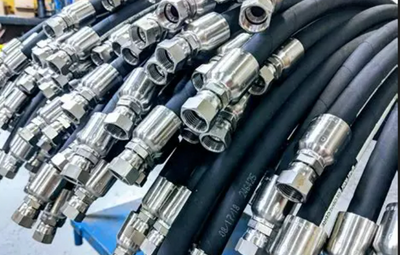
Hydraulic systems operate clamps, positioning devices, winches, top-drive or support functions, control valves, handling equipment, and other mechanisms across drilling and production sites. Their value is compact power transmission and controllable motion. Their risk is that high-pressure energy and contamination can move through a distributed network of lines and connections.
Reliable service depends on the whole circuit: pump and reservoir, fluid, valves, actuators, hoses, tubes, fittings, filtration, cooling, guarding, and safe maintenance.
Map the hydraulic function before servicing it
Identify which pump supplies each actuator, where relief and load-holding valves are located, how accumulators store energy, and what happens after a shutdown. A drilling or production package may have several independent hydraulic power units and control circuits.
Use current schematics and tagged lines. Field modifications, temporary hoses, and replacement manifolds can change routing. Before opening a circuit, lower or block loads, lock out energy, isolate accumulators, and verify pressure relief.
Fluid transmits power and protects components
Hydraulic oil carries force, lubricates contact surfaces, transports heat, and carries contamination toward filters or the reservoir. The equipment manufacturer specifies fluid type and viscosity grade for pump, seal, and temperature requirements.
Cold fluid can be too viscous for the inlet and increase cavitation risk. Hot fluid can become too thin for adequate lubrication and increase leakage. Do not use one universal temperature cutoff or add a thinning product unless it is approved for the system.
Monitor temperature, pressure, viscosity, water, particle count, filter condition, and oil appearance as a trend. A fluid change does not correct a damaged breather, suction leak, failing component, or overloaded cooler.
Hose assemblies need route-specific protection
Mobile and rig equipment exposes hose to vibration, articulation, abrasion, mud, salt spray, heat, impact, and pressure impulse. Match hose ID, construction, pressure-temperature capability, fluid, bend radius, ends, ferrules, and crimp data.
Sleeves, spiral guards, fire protection, clamps, and shielding address different hazards. They do not repair a hose routed in tension or below minimum bend radius. Inspect fitting ends for corrosion and wetness and covers for cuts, hardening, blistering, exposed reinforcement, and crushing.
Rigid tubing needs support, alignment, correct wall and hardness, and properly assembled flare or ferrule connections.
“Drilling hose” can name a different product class
Oilfield rotary or drilling hose carries drilling mud under specialized service and follows standards and construction distinct from ordinary hydraulic hose. The drilling string itself uses drill pipe, not hydraulic hose. Terminology varies at sites, so confirm media, function, pressure class, end connections, and governing specification before sourcing a replacement.
Choke, kill, cement, rotary, vibrator, and hydraulic-control lines should not be grouped by appearance. Each has different media, dynamic load, fire, and certification requirements.
Contamination control begins at the connection
Cap hoses and ports immediately after disconnection. Clean tools, flushing equipment, transfer containers, and new assemblies to the specified level. A particle introduced during a routine hose replacement can stick a control valve or score a pump.
Thread sealant must match the media and stay out of small passages. Flares, O-ring faces, port chamfers, and flange grooves need clean undamaged surfaces.
Maintenance uses condition and evidence
Inspect by equipment duty and manufacturer guidance, with shorter intervals for severe motion, heat, chemical, and abrasion exposure. Record pressure, temperature, fluid analysis, leaks, hose condition, clamp movement, and component noise.
When a pump, hose, or fitting fails, identify the mechanism before replacement. A burst near a stem may reflect overbending; repeated seal leaks may reveal misalignment; hot oil may point to continuous bypass rather than the cooler alone.
Pressure-test and function-test under controlled procedures. Never use a hand to locate a high-pressure leak, and treat injection injury as a medical emergency.
Hydraulic power supports oil and gas operations when fluid condition, line identity, routing, and stored energy remain controlled. Treating every hose as an isolated consumable misses the system conditions that determine its service life.