
Specifying Instrumentation Connections for Medical and Life Science Equipment
HGW Hydraulics on Apr 24th 2025
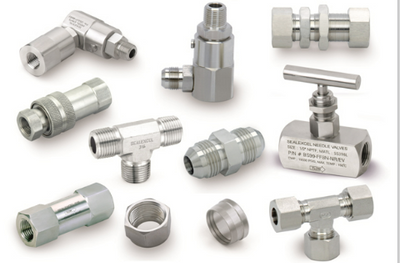
Medical and life science equipment can contain analytical instruments, gas and liquid controls, laboratory skids, utilities, diagnostic systems, bioprocess equipment, and manufacturing machinery. Their connections range from general pneumatic or hydraulic utilities to clean process paths and regulated device components.
One fitting catalog cannot define every requirement. Selection starts by classifying the fluid path, intended use, patient or product exposure, cleaning method, and applicable quality system.
Define the boundary before choosing a connection
State whether the line carries process product, sample, reagent, purified water, steam, compressed gas, vacuum, cooling fluid, hydraulic oil, or a noncontact utility. Record pressure, temperature, flow, cleanliness, and whether leakage could contaminate a product or affect a safety function.
A stainless instrumentation tube fitting used on plant air is not automatically appropriate inside a sterile or patient-connected flow path. Regulatory and validation requirements come from the finished equipment and jurisdiction.
Geometry affects cleanability and sample integrity
Dead legs, internal cavities, rough surfaces, crevices, and trapped seals can retain fluid or distort analytical samples. Tubing and fittings need suitable bore, surface finish, drainability, and assembly. Compression, welded, face-seal, sanitary, and disposable connections solve different problems.
Where repeated connection is required, evaluate particle generation, seal damage, misconnection risk, and ability to cap the line. Color or shape coding may support human factors but does not replace mechanical incompatibility where wrong connection is hazardous.
Valve type follows control function
Needle valves provide controlled low-flow adjustment. Diaphragm valves can isolate the process from stem mechanisms in suitable clean designs. Ball valves provide rapid isolation or routing. Check valves control reverse flow, while manifolds combine isolation, equalization, test, or distribution functions.
Specify internal volume, actuation, fail state, allowable leakage, cycle life, and cleaning compatibility. A valve body material alone does not define its seat, stem packing, lubricant, or emissions behavior.
Materials include every wetted element
316L stainless is common where corrosion resistance, fabrication, and clean surfaces are required. More demanding fluids can require higher alloys, polymers, glass, or disposable materials. Passivation and electropolishing may support a specified surface process but cannot repair bad weld geometry or the wrong alloy.
Elastomers and plastics must be checked for extractables, leachables, sterilization, temperature, chemical compatibility, and shelf life as applicable. Certificates should identify the exact lot and requirement rather than serve as generic marketing paperwork.
Assembly and cleanliness need controlled processes
Tube cutting, deburring, bending, orbital welding, ferrule installation, torque, cleaning, flushing, capping, and packaging can introduce particles or damage sealing surfaces. Define the assembly environment and inspection level appropriate to the fluid path.
Avoid transferring ordinary pipe-thread tape or lubricant into small analytical passages. Use only approved materials and validated processes. Keep stainless tools and storage free from carbon-steel contamination where surface requirements demand it.
Verification belongs to intended use
Tests may include pressure, vacuum, external or internal leakage, burst, flow, cleanliness, bioburden, sterilization compatibility, material identity, surface finish, or functional calibration. Not every connection needs every test. The equipment risk analysis and specification determine acceptance.
Maintain drawings, material and seal callouts, process records, revisions, supplier changes, and test evidence. A seemingly equivalent substitution can change dead volume, chemistry, or validation status.
Service should preserve the validated state
Label connections and use replacement parts with controlled identity. Follow decontamination and zero-energy procedures before opening lines. After repair, repeat the required cleaning and functional tests and update records.
Instrumentation fittings and valves support medical and life science systems when they are selected from the exact fluid boundary and quality requirement. “Stainless,” “clean,” or “medical” is not a complete specification; geometry, material, process, validation, and traceability create the usable connection.