
When Stainless Steel Fittings Make Sense—and When Another Alloy Is Needed
HGW Hydraulics on May 8th 2024
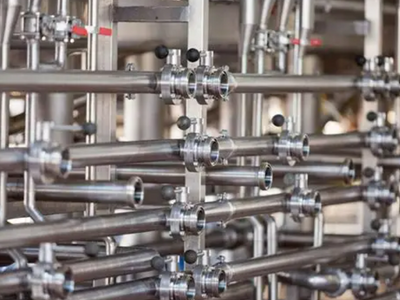
Stainless steel fittings are selected when the fluid, external environment, cleaning process, or documentation makes corrosion control important. They are not simply a stronger-looking version of carbon steel, and they are not immune to chlorides, acids, crevices, contamination, or incorrect assembly.
Material selection should start with the corrosion mechanism and operating conditions, then verify the exact fitting’s connection standard and rating.
Chromium creates a passive surface
Stainless steel contains enough chromium to form a thin chromium-rich oxide film in suitable environments. This passive layer can reform after minor damage when oxygen and surface conditions allow. Carbon steel lacks the same inherent passivation and usually depends on a coating, plating, paint, inhibitor, or controlled environment for exterior corrosion protection.
Free iron embedded during machining or handling can create rust staining on stainless surfaces. Segregated tools, cleaning, and passivation may be specified after fabrication. Surface condition is part of corrosion performance.
304 and 316 address different exposure levels
304 and 316 are common austenitic stainless families. Both contain chromium and nickel; 316 normally adds molybdenum, improving resistance to pitting and crevice corrosion in many chloride conditions.
That advantage is not absolute. Chloride concentration, temperature, deposits, stagnation, weld condition, cleaning chemicals, and geometry can overwhelm 316. More highly alloyed stainless, nickel alloys, titanium, lined components, or another material may be needed.
Low-carbon variants such as 304L and 316L can be relevant to welding and sensitization control. Use the specified grade rather than accepting “stainless” as a complete material callout.
Oil, gas, and chemical service require media-specific review
Offshore spray, process chemicals, sour environments, heat, and cleaning can create multiple corrosion mechanisms. Stainless is common in suitable oil, gas, chemical, and instrumentation systems, but compatibility must be checked against actual media composition and temperature.
Hydrogen sulfide service can invoke NACE or ISO material requirements and hardness controls. Nickel alloys such as Monel, Hastelloy, or Inconel may be selected for particular severe conditions. Their higher cost does not make them universal replacements, and generic alloy names do not define the exact grade.
Food, beverage, and pharmaceutical equipment adds cleanability
Process surfaces may need to resist repeated washdown, sanitizers, steam, or clean-in-place chemicals without trapping residue. Stainless steel is widely used because suitable grades can provide corrosion resistance, cleanable surfaces, and fabrication options.
Hygienic suitability depends on much more than alloy. Surface finish, crevices, drainability, weld quality, seal material, dead legs, cleaning validation, and applicable FDA or industry requirements control the finished system. A hydraulic-style threaded fitting is not automatically a sanitary process fitting.
Water, marine, textile, mining, and general industry vary widely
Water treatment can expose components to chlorides, oxidizers, pH variation, and treatment chemicals. Marine equipment adds salt deposition and galvanic contact. Textile, pulp, mining, and washdown systems introduce their own chemicals, abrasion, and maintenance conditions.
Stainless may extend service where plated carbon steel is consumed quickly, but it can also gall at threads or suffer localized corrosion under deposits. Brass, carbon steel, polymers, or specialty alloys may be better for a particular combination of cost, conductivity, weight, and media.
Ratings belong to the component, not the alloy family
Do not assign a temperature or pressure limit from the word stainless. A forged adapter, cast fitting, tube fitting, ball valve, and hose end have different geometries and governing standards. Size, wall, seal, thread, manufacturing route, and temperature determine the allowable condition.
At a hydraulic connection, also verify JIC, ORFS, ORB, NPT, BSP, metric, flange, or other sealing geometry. Upgrading material while retaining a wrong seat does not stop a leak.
Purchase and store stainless by verified identity
Specify grade, product standard, dimensions, connection ends, surface condition, seal material, and documentation required by the application. Use material records or positive material identification where the risk justifies it. Keep 304, 316, and specialty alloys segregated because they can look identical.
Control contact with carbon-steel grinding dust and tools. Cap openings and protect machined seats. During assembly, follow authorized lubrication and tightening practices to manage galling without contaminating the fluid.
Stainless steel fittings make sense when their passive alloy system addresses a defined environment and the complete connection meets the process. The best selection may be 304, 316, another alloy, or protected carbon steel; the answer comes from service evidence rather than a universal material ranking.