
Regionalize Construction Hydraulic Spares Without Fragmenting Part Control
HGW Hydraulics on Dec 2nd 2025
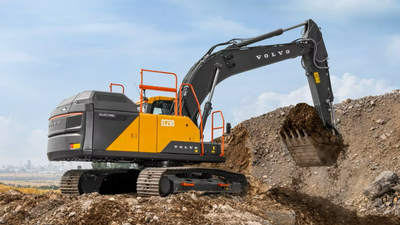
Construction equipment is supported through manufacturers, dealers, rental fleets, distributors and field repair shops. This network puts service close to jobsites, but it can also split demand across regions, machine generations and connection standards.
Regional inventory helps only when every stocked item remains tied to a controlled machine and part definition.
Map demand by machine and failure consequence
Start with fleet models, serial or configuration ranges, installed hose and fitting standards, service location and downtime impact. Separate routine consumables from parts whose failure stops a critical lift, pump or steering circuit.
Order history alone can hide unmet demand or repeated misidentification. Add technician findings, emergency purchases, returned parts and no-fit events. This reveals whether an apparently slow-moving adapter is actually an essential exception.
Place fast movers near the service event
Common hose ends, adapters, seals, caps and diagnostic fittings can support rapid repair when stocked in U.S. regional locations near customers and carriers. Set reorder points from usage variability, replenishment time and the cost of a stockout rather than one global average.
Central stock can cover broader or lower-frequency sizes. Emergency transfer between hubs should preserve lot, part and revision identity. A shelf full of approximate substitutes does not create availability.
Coordinate overseas production with local availability
Overseas manufacturing can support range breadth and planned replenishment, while U.S. inventory handles day-to-day demand. The handoff needs approved drawings, revision status, packaging, inspection criteria, transit planning and customs data.
Account for production, international transportation, customs clearance, receiving inspection and inland movement when setting replenishment. Do not advertise a fixed lead time that ignores product and logistics variation.
Prevent regions from creating their own part versions
Use one master record for interface, dimensions, material, coating, pressure basis, seals, labels and approved source. When a local team identifies a substitute, require technical review and record the affected machine range.
First-article confirmation and incoming checks should focus on critical dimensions and sealing surfaces. Quarantine nonconforming stock and connect corrective action to the drawing or process revision. This keeps a regional shortage from producing a permanent uncontrolled variant.
Make kits match the repair task
A machine-specific service kit can combine the verified hose or adapter with seals, caps and installation information. Avoid filling every kit with the same generic assortment. Connection family, body angle, orientation and wrench clearance often determine whether a part fits.
Returns should capture why an item was unused: wrong identification, changed machine configuration, damage, packaging or demand cancellation. That feedback improves both catalog data and regional stocking.
Measure service, not warehouse size
Track verified fill rate, no-fit returns, emergency freight, stockouts, aged inventory and time from request to usable part. A large hub in a good transport location can help, but correct product data and replenishment discipline determine whether the shipment restores the machine.
Regional supply chains stay competitive when they shorten the physical distance to the jobsite without widening the technical distance between the stocked part and the equipment.