
Keep Agricultural Hydraulics Ready for Short Field-Work Windows
HGW Hydraulics on Jul 29th 2025
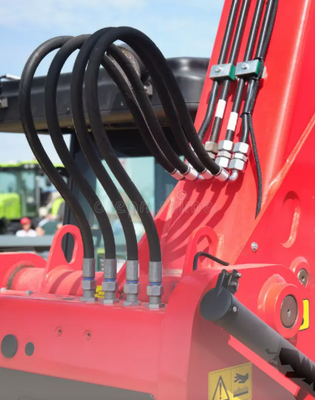
Agriculture supplies food, feed, fiber and inputs used throughout manufacturing and daily life. Producing them depends on weather, soil and biological schedules that cannot always be moved to accommodate an equipment repair.
That makes hydraulic connection management a timing problem as well as a technical one. A low-cost adapter becomes critical when a planter, sprayer or loader is stopped during a narrow operating window.
Follow the hydraulic functions across the machine
Tractors and self-propelled machines use hydraulic power for steering, hitch control, folding, lifting and auxiliary circuits. Implements use cylinders, motors and valves to position tools, drive conveyors, control depth, meter material and move crop.
Trace each connection by function and machine location. A hose at an articulation point sees different motion from a tube mounted inside a protected frame. A remote coupler serving interchangeable implements needs identification and contamination control that a permanent circuit may not.
Design for dirt, vegetation, chemicals, and weather
Field equipment collects dust, mud, crop residue and moisture. Fertilizer and spray chemicals can attack coatings, hose covers and elastomers. Sun, freezing conditions and engine heat create additional exposure.
Keep caps and plugs clean, position connections away from impact where possible and inspect guards and supports. Before coupling an implement, wipe both halves under the approved method so soil is not pushed into the hydraulic circuit.
Control implement connection errors
Multiple hose pairs can be easy to cross when an implement is attached. Label pressure, return, case-drain or other defined functions and preserve color or tag conventions across the fleet. Confirm that quick couplers, tips and pressure state are compatible before forcing a connection.
Trapped pressure caused by heat or actuator load needs the machine-specific relief procedure. Hammering or loosening a fitting to connect a hose can damage the coupler and expose the operator to stored energy.
Build spares from the machines actually in use
Farm fleets can combine North American, European and Japanese connection families. Record the equipment model, circuit, hose size, end forms, length, orientation and protective sleeve. Photographs and controlled drawings reduce the chance of treating BSP, metric or JIS parts as approximate JIC or NPT matches.
Stock common service items near the equipment while planning replenishment for slower-moving sizes. A U.S. local inventory can support urgent replacements, while overseas production and scheduled replenishment cover broader ranges when specifications and version control remain aligned.
Use the off-season to remove repeat failures
Inspect hoses through the full fold, lift and turn positions. Look for abrasion, kinks, twist, exposed reinforcement, coupling movement, corrosion and tubes pulled out of alignment. Review failures from the prior season and correct clamps, routes or heat shields rather than installing the same assembly again.
Hydraulic reliability does not explain the whole value of agriculture, but it protects the equipment that performs time-sensitive work. Accurate machine records, clean coupling practice and locally available verified connections help keep a small part from controlling an entire field operation.