
Specify Brass Push-On Hose Fittings as a Qualified Hose System
HGW Hydraulics on Jun 25th 2024
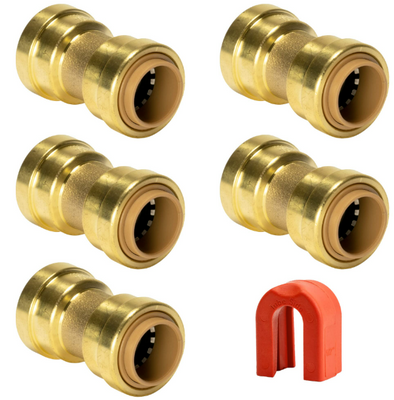
A brass push-on hose fitting can provide a fast connection without a production crimp, but only within a matched hose-and-fitting system. The fact that a barb enters the hose does not authorize clamp-free service or establish pressure capability.
Identify the dedicated hose and retention design
Record hose manufacturer and family, inside diameter, wall, reinforcement, temperature, fluid, pressure, vacuum, bend, and cover environment. Push-on or push-lock systems use barb geometry and hose construction designed to work together.
Some qualified systems are assembled without a clamp; others require a clamp, ferrule, or different retention method. Follow the hose and fitting manufacturer instructions. Adding an unapproved worm-drive clamp can cut the cover or concentrate load, while omitting a required clamp can allow pull-off.
Prepare and insert the hose correctly
Cut square with a suitable tool, inspect the bore and cover, and remove debris. Use only approved lubricant and insertion method. Push to the specified shoulder or depth without damaging reinforcement or twisting the hose.
Check pull-off or proof requirements under the applicable assembly program. Do not reuse a hose end that has been stretched, cut, or removed from a barb unless the system instructions permit a controlled remake.
Specify the opposite end as its own connection
Brass push-on fittings can transition to NPT, JIC, SAE 45-degree flare, another hose, or other standards. An NPT end seals differently from a 37-degree JIC or 45-degree flare. State thread, size, seat, male or female form, sealant requirement, body shape, and orientation.
Do not describe all SAE threads as one connection. A shared straight thread may still present a different sealing surface.
Confirm brass alloy and service approval
Verify pressure, temperature, fluid compatibility, brass alloy, corrosion exposure, and any potable-water, fuel, gas, automotive, D.O.T., or customer approval. A catalog size range does not mean every size has the same rating or that a transportation fitting is approved by appearance.
For a custom geometry, create a drawing with hose barb, opposite port, flow bore, wrench flats, material, rating, inspection, and first-article requirements. Do not promise a custom lead time before those details are controlled.
Push-on convenience is real when the system is qualified: correct hose, exact barb, approved clamp rule, complete threaded-end identity, and verified assembly. Without those controls, a simple brass connector becomes an untested hose-retention experiment.