
Use a Custom Hydraulic Fitting Only After Defining the Leak Mechanism
HGW Hydraulics on Apr 2nd 2026
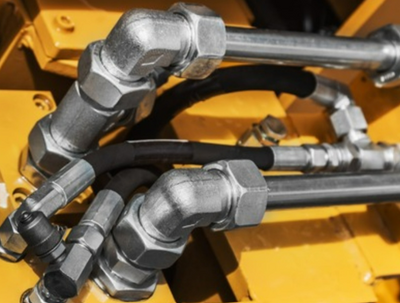
A custom fitting can replace an awkward adapter stack, resolve clearance or align unlike approved interfaces. It should not be the first response to an unidentified leak. If a damaged seat, hose tension or wrong O-ring caused the problem, a special body can reproduce it at higher cost.
Document where pressure escapes
Clean the area and identify the actual sealing interface: tapered thread, flare, face O-ring, boss seal, ferrule, flange or hose attachment. Record operating pressure including known transients, temperature, fluid, vibration, corrosion and connected component movement.
Preserve failed parts and photographs. A wet thread may simply be the path oil follows after a face seal leaks elsewhere.
Decide whether geometry reduction solves the cause
Multiple adapters add joints, length and wrench interfaces. A single special can reduce those points and improve clearance. Combining two ends is useful only when both interface standards and the body load path remain correct.
Check rotation, installation sequence, tool access and whether the hose or tube can meet the new port without side load. A shorter fitting can worsen bend radius, and eliminating a swivel may make assembly impossible.
Create a controlled interface drawing
Define every thread, seat, port, groove, spotface, bore, shoulder, orientation and envelope dimension. State material, heat treatment or condition, coating, surface finish, edge control and cleanliness. Use tolerances that protect sealing and interchangeability without making manufacturing needlessly restrictive.
Do not copy dimensions from an unidentified sample. Measure the machine interface and confirm the governing standards. If the special joins two regional systems, name both forms explicitly.
Establish the pressure and material basis
Body shape, cross-section, thread engagement and manufacturing route influence strength. Select bar, forging or other stock and exact alloy for the fluid, environment and fabrication process. A stainless upgrade does not automatically validate a thinner wall or sharper cross-drill intersection.
Engineering review should address static pressure, fatigue, proof or burst qualification as applicable and the rating of mating components. Avoid assigning a familiar standard-part pressure to a new geometry without evidence.
Approve the first article before stocking volume
Inspect critical dimensions and sealing surfaces against the drawing. Confirm material documentation, coating and cleanliness. Trial assembly should use the real mating port, tube or hose while checking orientation and wrench access.
Perform the required leakage, proof, burst, impulse or functional tests under a controlled plan. Quarantine deviations and update the drawing only through revision control.
Keep the special serviceable
Assign a unique part number and link it to affected machines and serial ranges. Define replaceable seals, installation instructions and inspection limits. Hold U.S. service inventory for justified fast-moving specials and plan overseas replenishment against the same approved revision.
Custom fittings reduce leak risk when they remove a demonstrated geometric problem and remain traceable. They should never hide a near-match thread or substitute marketing arithmetic for a qualified pressure boundary.