
Translate an Urgent ORB Manifold Request into a Controlled Drawing
Jan 24th 2024
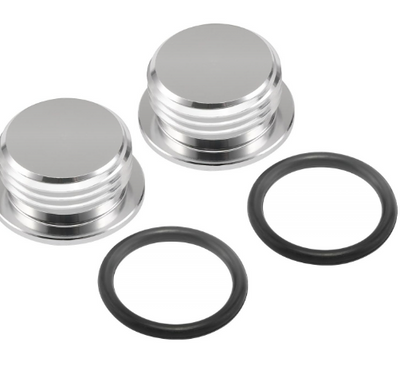
An urgent custom manifold request is not solved by copying a sketch directly into production. The fastest reliable route is to convert the equipment need into a controlled interface drawing, identify the high-risk dimensions, and agree on inspection before material is cut. Lead time should be quoted from the confirmed scope rather than promised from a previous project story.
Capture the function of every port
Record inlet, outlet, work, drain, test, and plugged ports; normal and maximum flow; working and surge pressure; fluid; temperature; cleanliness; and the consequence of leakage. Identify each connection by standard, size, seal, and orientation.
For an SAE O-ring boss port, confirm thread and port geometry, spotface, chamfer, O-ring location, and whether the mating end is fixed or adjustable. “Two female ORB ports” is not enough without sizes, spacing, depth, passage connection, and access.
Reserve room for the adjustable stud end
An adjustable male ORB connection can use a locknut and backup washer so an elbow or manifold body can be oriented without another full thread turn. The design needs clearance for the locknut, wrench, seal, and final body position.
Check interference with neighboring ports, mounting bolts, hose ends, and the machine envelope. Make sure the stud has the required engagement without bottoming internally before its O-ring is compressed. The installation method should come from the applicable fitting data.
Design the internal passage and body together
Port spacing is constrained by thread envelopes, spotfaces, cross-drills, wall thickness, sealing lands, plugs, and tool access. A compact external block can leave inadequate material between internal passages or create a difficult burr and cleaning location.
Size passages for flow and acceptable pressure loss, then review intersecting holes for trapped chips and cleaning access. Define how cross-drills are closed and how those closures are tested. Avoid hidden dead ends where cleanliness is critical.
Specify material from the environment
Carbon steel with a controlled finish can be suitable for many hydraulic manifolds; stainless or another alloy may be needed for corrosion or media reasons. Material choice does not establish pressure rating by itself. Body dimensions, threads, passages, stress concentrations, and test basis remain part of design approval.
State material grade, heat treatment if relevant, coating, coating exclusions on seal areas, and required documentation. Do not invent a pressure, finish, or delivery claim before the drawing is reviewed.
Approve first article and change control
Agree on drawing revision, tolerances, deburring, cleanliness, port gauges, dimensional report, material records, pressure or leakage test, marking, and packaging. A first article can verify the equipment fit before a larger quantity is made.
If the customer changes hose orientation, port size, mounting, or machine clearance, update the drawing and re-evaluate affected features. Preserve the approved sample and revision history. The value of a custom ORB manifold is not a heroic turnaround anecdote; it is a documented interface that can be produced, inspected, installed, and reordered without repeating the original emergency.