
Control Dual-Ferrule Tube Fittings through Tube Quality and Component Identity
HGW Hydraulics on Jul 8th 2021
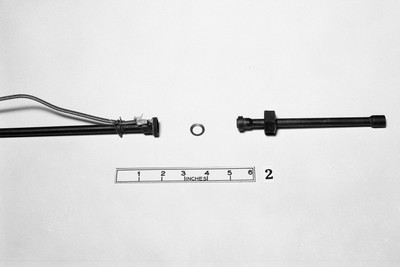
Dual-ferrule tube fittings connect instruments, valves and sampling equipment without flaring or threading the tube. Their reliability depends on precise body, nut and ferrule geometry acting on tube that meets dimensional and material limits.
Give each component its defined role
The body contains the tube bore and sealing cone. The nut drives the ferrule set. In many designs, the front ferrule establishes the primary seal at the body and tube while the back ferrule controls tube grip and supports the front element.
Do not generalize the rear ferrule as a second pressure seal for every design. Use the manufacturer’s description and never omit, reverse or mix components.
Follow the load path during pull-up
The tube must reach the shoulder. As the nut advances from the specified start, ferrules move and deform in a controlled way. This creates contact bands and mechanical retention on the unflared tube.
Fine nut threads support controlled movement but do not guarantee that unlike brands match. Body cone angles, ferrule hardness and thread tolerances can differ.
Make tube quality part of receiving inspection
Verify outside diameter, wall, alloy, hardness, surface finish, ovality and seam condition. Tube that is too hard may resist grip; tube that is too soft or thin may collapse. Scratches across the sealing band can create leakage.
Store capped tube away from carbon-steel contamination when cleanliness or corrosion requires it. Cut and deburr using tools compatible with the material.
Use fittings where their process controls fit
Instrumentation lines carry gas, liquid, samples and pressure signals in chemical, refinery, laboratory, power and clean-process equipment. Dual ferrules can reduce welding and simplify instrument replacement, but media compatibility and leakage consequence still control material and testing.
Support tube against vibration and thermal movement. The ferrule grip should not carry equipment weight or correct poor alignment.
Treat assembly and remake as separate procedures
First pull-up may use turns, torque, a gap gauge or preset tool depending on the system and size. A remake starts from already set ferrules on the original tube and follows different instructions. Transferring old ferrules to new tube is not a remake.
If cutting back for a new end, confirm enough length remains for insertion, route and support. Keep parts paired and protect opened ports from particles.
Diagnose with retained evidence
When a joint leaks, inspect component identity, tube marks, insertion, alignment, corrosion and vibration before adding wrench travel. Retain the ferrules and tube section so fretting, scoring or over-pull-up can be reviewed.
Record tube and fitting material, port on the opposite side, pressure, temperature and fluid. A dual-ferrule connection succeeds because one controlled component set was installed on qualified tube—not because two ferrules automatically make every joint safer.