
Four Ways to Join Instrumentation Tube: Ferrule, Cone-and-Thread, Welded, and Push-In
HGW Hydraulics on Jul 6th 2022
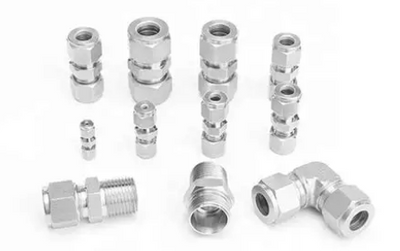
Instrumentation tubing carries more than fluid from one point to another. It connects control valves, pressure and temperature instruments, flow meters, level devices, sampling systems, and calibration equipment. A joint must support the process conditions while remaining practical to fabricate, inspect, and maintain.
Four connection methods cover very different duties: ferrule compression fittings, cone-and-thread joints, butt-weld connections, and pneumatic push-in fittings. They should not be ranked on one scale from “low” to “high” pressure. Each method solves a different combination of preparation, service access, vibration, cleanliness, and media requirements.
Choose by how the joint will be made and serviced
Before comparing hardware, decide where fabrication will occur. A field technician may have hand tools and limited access. A high-pressure system may require precision coning and threading equipment. A welded process line requires a qualified procedure and controlled cleanliness. A pneumatic control panel may prioritize fast tube insertion and easy rerouting.
Tube outside diameter is a common size reference, but diameter alone does not establish compatibility. Wall thickness, material, hardness, surface finish, pressure, temperature, and the connection manufacturer's limits all affect selection. Reducing unions and adapters can change size or connect a tube end to NPT, SAE, BSP, or another port, but each end retains its own assembly rules.
Ferrule compression fittings grip an unflared tube
A compression tube fitting normally includes a body, nut, and either one ferrule or a front-and-back ferrule set. As the nut is tightened, the ferrule system grips and seals on the tube outside diameter. The exact deformation and sealing action depend on the fitting design, so components from different systems should not be mixed.
Installation generally requires fewer specialized tools than coning, threading, or welding. The tube is cut square, deburred, inserted fully, and tightened according to the specified turns or torque. That can make compression fittings efficient for instrumentation panels, process measurement lines, laboratory equipment, and field-routed tubing.
Tube quality remains critical. Scratches across the sealing zone, out-of-round tube, unsuitable hardness, or incomplete insertion can defeat the joint. Thin-wall tube can provide a larger bore for a given outside diameter and may be easier to bend, but its allowable pressure and support requirements must be checked for the actual system.
Compression joints can be disconnected for maintenance when the product instructions permit. Reassembly limits and inspection requirements should be followed rather than assuming the ferrules can be repeatedly reset.
Cone-and-thread joints require precision at the tube end
In a cone-and-thread connection, the tube end is machined to a conical sealing surface and threaded so it can be drawn firmly into the fitting body. This architecture is used in demanding high-pressure instrumentation where a purpose-designed connection and heavy-wall tube are required.
The preparation is more involved than sliding a ferrule onto a tube. Coning and threading tools must produce the specified geometry and surface finish. Chips and cutting fluid created during preparation have to be removed from the bore. Training, inspection, and controlled tooling add time but are part of making the joint suitable for its intended service.
Do not assign a generic maximum pressure to every cone-and-thread fitting. Ratings vary by manufacturer, series, tube size, material, temperature, and connection. Use the complete system data. The joint may be removable for maintenance, but vibration, assembly condition, and reinstallation procedure still require evaluation.
Butt welding removes the mechanical joint
A butt-weld fitting permanently joins the tube end to the fitting or adjacent tube. When the weld procedure, alignment, purge, material, and inspection are correct, the continuous metal path can provide strong resistance to vibration and eliminate ferrules or threaded tube-end parts from the process boundary.
That permanence changes the maintenance plan. Welding requires equipment, access, qualified personnel, and preparation appropriate to the alloy and service. The system may need isolation, cleaning, inert-gas purging, nondestructive examination, or post-weld treatment. A joint in a crowded operating plant can be difficult to cut out and restore.
Welded construction is therefore selected where its integrity, cleanliness, or vibration performance justifies fabrication cost and reduced field serviceability. It is not automatically the right answer for every high-pressure line, especially when instruments must be replaced or rerouted frequently.
Pneumatic push-in fittings serve a different pressure and media class
Push-in or push-to-connect pneumatic fittings retain compatible plastic tube with an internal gripping collet and seal. The tube is cut square and pushed to the required depth; releasing the collet allows removal when the design permits. Common body materials include engineered polymers and plated brass combinations.
These fittings are widely used for compressed-air controls, automation, and instrument air with compatible polyurethane or nylon tubing. Straight connectors, elbows, tees, flow controls, and thread adapters allow compact routing in panels and machinery.
They must not be treated as substitutes for hydraulic quick couplings or high-pressure instrumentation fittings. Confirm the approved tube material and outside diameter, pressure and temperature range, thread form, media compatibility, and environmental exposure. A convenient push-in action does not establish suitability for hydraulic oil or high-pressure liquid service.
Compare total installed work, not only fitting price
Compression fittings may reduce tooling and installation time. Cone-and-thread systems add tube-end machining and cleaning. Butt welding adds qualified labor and inspection but can reduce mechanical-joint concerns. Pneumatic push-in fittings minimize assembly time in their intended air-service range.
Lifecycle cost also includes access for inspection, replacement, contamination control, spare-part availability, and the consequence of a leak. A permanent weld may be economical in a stable process line but costly in a panel that changes frequently. A removable compression joint may be efficient in service but still requires correct tube preparation and installation discipline.
The four methods belong in the same discussion because they join tube; they do not belong in the same application by default. Defining the media, operating envelope, vibration, fabrication location, cleanliness, and maintenance plan makes the correct connection style much clearer.