
Understand Compression Fittings from Tube Contact to Final Pull-Up
HGW Hydraulics on Jun 29th 2021
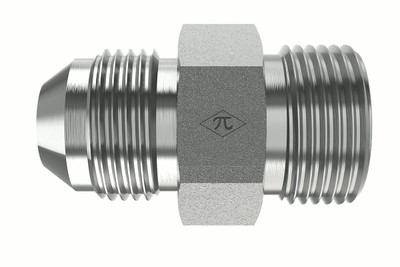
A compression fitting drives one or more shaped elements against tube and fitting body. The external nut supplies assembly force, but pressure normally seals at ferrule, sleeve or body contact—not through the nut threads alone.
This distinction corrects many purchasing errors involving general plumbing compression parts, instrumentation fittings and hydraulic flareless systems.
Identify the actual component set
Common designs include a body, nut and single ring, while instrumentation systems may use front and back ferrules. Cutting-ring tube fittings use another controlled geometry. These parts are not interchangeable merely because they fit the same tube outside diameter.
Record maker or system, tube OD, wall, material, hardness, opposite port and intended service. An external thread can be proprietary to the nut and does not define the process connection.
Prepare tube for uniform contact
Cut squarely with an approved tool, deburr without an excessive chamfer and clean away chips. Inspect for longitudinal scratches, dents, paint, ovality and a welded seam condition that violates the fitting requirements.
Insert tube fully to the shoulder and align it naturally. Tightening a nut while the tube is short of the stop or pulled sideways creates an uneven ferrule set.
Use material and rating evidence
Brass fittings serve many compatible plumbing, pneumatic and utility applications. Stainless and other alloys support defined corrosion, cleanliness or process requirements. Plastic-bodied compression connections have their own tube, pressure and temperature limits.
There is no universal minus-5-to-125 psi range for compression fittings. Qualified instrumentation and hydraulic designs can operate at very different conditions, governed by fitting, tube, temperature and standard.
Apply the exact assembly procedure
Bring the nut to the specified starting state and tighten by prescribed turns, torque, gauge or preset tool. “Hand tight only” and “tighten until it will not move” are unsafe universal instructions. Use a backup wrench and protect the body from rotation.
On service, distinguish a permitted remake with the original ferrules set on the same tube from transferring used ferrules to another tube. Follow inspection and remake limits for that system.
Diagnose leaks at the seal, not the threads
After safe isolation, inspect tube contact, ferrules, body cone, insertion, material and routing. Dirt on nut threads may affect assembly friction, but cleaning or lubricating them casually will not repair a scored seal. Abrasive cloth can change critical geometry or embed contamination.
Do not accept generic claims that compression fittings last ten years while hydraulic tubing lasts thirty. Replacement follows condition, duty, material and the equipment program.
A compression fitting works when the tube and shaped components deform within a qualified procedure. Its convenience comes from eliminating a welded or flared tube end, not from eliminating tools, inspection or engineering limits.