
Following Energy Through a Hydraulic Circuit
HGW Hydraulics on Jun 25th 2025
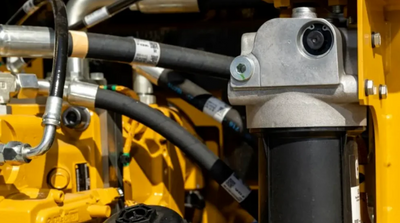
A hydraulic system does not create energy at the cylinder. A motor or engine drives a pump, the pump moves fluid, valves control its path and pressure, and an actuator converts hydraulic power into force and motion. The reservoir, filters, cooler, lines, seals, and controls keep that energy transfer usable.
Following this path explains why pressure and flow are related but not interchangeable: pressure responds to resistance and load, while flow determines how rapidly volume reaches an actuator.
The prime mover supplies mechanical input
An electric motor, internal-combustion engine, turbine, or other source turns the pump. Speed, available torque, duty cycle, alignment, coupling, and control method must match the pump. A smaller motor is not automatically possible just because hydraulics can multiply force; energy and efficiency still balance across the system.
The pump displaces fluid
Gear, vane, and piston pumps use different mechanisms and can be fixed or variable displacement. The pump creates flow by displacing volume. Pressure rises when that flow meets a load or restriction, up to the controls and component limits.
Inlet conditions are critical. Low fluid level, excessive viscosity, restricted suction plumbing, air leaks, or high speed can cause cavitation or aeration. The pump cannot compensate for a poor reservoir-to-inlet path.
The reservoir manages more than storage
A reservoir holds working fluid and can support heat transfer, air release, settling, filling, and maintenance. Baffles, breathers, return placement, suction location, level, and residence time affect performance. Filtration is still required; a tank is not a complete contamination-control device.
Closed hydrostatic circuits use a different flow architecture and still need charge, cooling, flushing, and makeup functions as designed.
Valves define direction, pressure, and flow
Directional valves route fluid to the required side of a cylinder or motor. Pressure-control valves limit, reduce, sequence, counterbalance, or unload pressure according to their function. Flow-control valves regulate actuator speed by controlling flow and pressure drop.
Valves can be manual, mechanical, hydraulic, pneumatic, solenoid, proportional, or servo operated. Their normal state and safe state should be shown on the schematic. A relief valve protects against excessive pressure but should not be used continuously to hide an oversized pump or blocked circuit.
Actuators turn fluid power into work
A cylinder produces linear force related to pressure and effective piston area; speed depends on flow and area. A hydraulic motor produces rotary torque and speed under its displacement and operating conditions.
Pascal’s principle explains how pressure in a confined fluid acts in all directions, allowing different piston areas to produce different forces. It does not eliminate losses from leakage, friction, pressure drop, and heat.
Load-holding valves, mechanical blocking, cushions, and controls may be required to manage gravity, inertia, and stopped motion.
Lines and fittings preserve the boundary
Hose, tube, pipe, manifolds, flanges, and fittings carry flow between components. Bore size influences velocity and pressure loss. Routing controls abrasion, bend, vibration, heat, and service access.
JIC, ORFS, ORB, NPT, BSP, metric, flange, and other connections seal in different places. A thread that appears to fit is not enough. Material, pressure-temperature rating, fluid compatibility, and assembly method must match.
Heat and contamination reveal lost performance
Energy lost through throttling, internal leakage, friction, and compression becomes heat. Particles, water, air, and degraded oil can damage pumps, valves, actuators, and seals. Temperature, pressure, flow, filter condition, and fluid analysis should be trended together.
Hydraulic systems power construction, agriculture, manufacturing, transport, aviation, drilling, and material handling because they route large controllable forces through compact actuators. Understanding them as an energy path makes design and troubleshooting more accurate than memorizing a list of five parts.