
Select Hydraulic Adapters by Conversion, Routing, and Material Zone
HGW Hydraulics on Jun 15th 2021
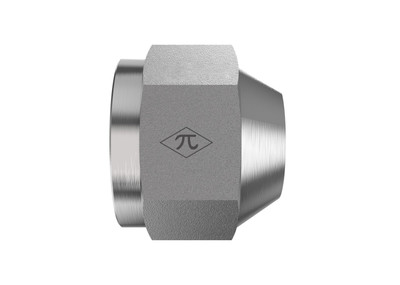
Hydraulic adapters translate between conductor and port requirements. They may change standard, size, gender or direction. Material is important only after both interfaces and the installed loads are known.
State the conversion before naming the metal
Identify thread diameter, pitch, taper, seat, O-ring or washer on each end. Record whether the part is a reducer, union, bulkhead, swivel, tee or elbow. A photo of the hex cannot reveal the two seals.
Use a controlled drawing or verified standard table for a recurring conversion. This avoids building inventory around a worn sample or a description that reverses male and female ends.
Make shape support the hose or tube route
A 45- or 90-degree body can improve clearance and reduce a tight hose bend. It can also create leverage at the port if left unsupported. Tees and crosses change flow paths; reducers may increase velocity and pressure loss.
Check assembly sequence and wrench access. A fixed elbow cannot always be oriented in a tapered port without over- or under-engagement. Use an adjustable design where the standard provides one.
Use aluminum only within a qualified design
Aluminum can reduce weight and provide useful corrosion behavior in selected automotive, aerospace or industrial fluid systems. Alloy, temper, anodizing, thread wear, fatigue, fluid and galvanic contact determine suitability.
It is not automatically the most common high-performance adapter material and should not replace steel in a hydraulic circuit from weight alone.
Treat coated carbon steel as a strength-and-finish system
Carbon-steel adapters are common in mobile and industrial hydraulics. The base alloy provides mechanical properties; plating or coating supplies much of the external corrosion protection. Wrench damage, crimping, salt and repeated service can expose steel.
Do not describe uncoated steel as highly corrosion resistant or assume it exceeds an SAE requirement without product evidence.
Select stainless by grade and exposure
Stainless adapters may be justified for washdown, coastal, chemical or other corrosive zones. Grade, surface condition, chloride concentration, crevices and galling controls matter. Stainless does not guarantee leakage control; the seat, seal and assembly remain decisive.
Black-iron pipe hardware should not be assigned casually to a hydraulic return merely because pressure is lower. Verify product standard, pressure and temperature rating, contamination, corrosion and machine requirements. A return line can still see transients and safety consequences.
Review the adapter stack as one component
Use the lowest qualified rating, verify bore and support the connected conductor. If multiple adapters are required because exact stock is unavailable, assess length, leak points and local load. A single controlled special may be better after first-article and pressure qualification.
Adapter selection succeeds when it resolves a documented interface and route. Generic material hierarchies cannot replace that two-ended engineering description.