
How Hose Ends Attach and Disconnect: Crimp, Barb, Push-On, Coupler, and Reusable Types
HGW Hydraulics on Oct 4th 2022
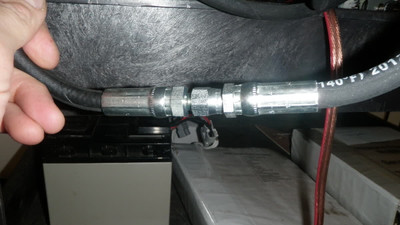
“Hose end fitting” can describe two different interfaces. One interface attaches a fitting permanently or mechanically to the hose. The other connects the finished hose assembly to a machine. A crimp stem and ferrule belong to the first interface; a quick-disconnect coupler may belong to the second. Treating them as six interchangeable fitting choices mixes attachment methods with connection functions.
A better comparison asks two questions: how is the end retained on the hose, and how will the assembly connect or disconnect in service? Pressure, hose construction, media, temperature, movement, and the approved fitting system then determine which answer is valid.
Crimped ends form a controlled permanent assembly
A crimped hose end uses a stem inserted into the hose and a ferrule compressed around the outside with specified dies. The finished crimp creates retention and sealing through the designed interaction of hose tube, reinforcement, cover, stem, and ferrule.
Crimping is widely used on mobile and industrial hydraulic equipment because the process can produce a compact, repeatable assembly when correct components and current crimp data are used. The fitting may be steel, stainless steel, brass, or another specified material, but material alone does not establish compatibility.
The hose, stem, and ferrule should be qualified as one system. Confirm insertion depth, die set, crimp diameter, measurement location, and any skive requirement. A crimped end is not intended to be removed from a used hose and installed again. If the assembly is cut apart, inspect the mating machine port and build a new approved hose assembly.
Barbed ends rely on hose engagement and a retention method
A hose barb uses ridges along the stem to grip the hose bore. Depending on the service and fitting design, a clamp, band, crimp sleeve, or other retention method may secure the hose. Barbs are common in water, air, low-pressure fluid transfer, agricultural equipment, and compatible process lines.
They should not be assumed suitable for a hydraulic pressure line simply because the stem fits tightly. Hose inside diameter, wall, reinforcement, barb geometry, clamp type, media, temperature, and published working limits all matter. An ordinary worm-drive clamp and general-purpose hose are not replacements for a qualified hydraulic crimp system.
Barb material also has to match the fluid and environment. Brass, stainless steel, plated steel, and polymers have different corrosion and temperature behavior. Check the connection on the opposite end, which may be NPT, JIC, a flange, or another port type.
Push-on hose ends require the hose designed for them
Push-on or push-lock hose systems use a purpose-designed hose and barbed fitting that develop retention through their matched geometry. Many approved combinations assemble without an external clamp, but that feature belongs to the specified system. It is not a general rule for any soft hose pushed over any barb.
These assemblies can be convenient for shop air, lubrication, low-pressure hydraulic return, and other services covered by the product data. Installation normally requires a square cut and full insertion to the fitting shoulder. Lubricants, clamps, or heating should not be added unless the assembly instructions allow them.
Push-on is different from pneumatic push-to-connect. A pneumatic push-in fitting often uses a collet and O-ring around rigid or semi-rigid plastic tube. A push-on hose fitting retains a flexible hose on a barbed stem. The names sound similar, but the parts and applications differ.
Quick couplers make the machine connection removable
A hydraulic quick coupling consists of mating male and female halves that lock together and release without unthreading the hose. Internal valves may limit fluid loss and air entry during disconnection. Couplers are used on construction attachments, agricultural implements, test equipment, and other circuits that are intentionally changed or serviced.
The coupler does not replace the hose attachment. Each coupling half still has to be crimped, threaded, or otherwise connected to the hose or machine port. Select the interface profile, body size, flow path, pressure and temperature rating, valve arrangement, seal material, and media compatibility as a complete specification.
Two couplers that physically connect may not have the same performance or valve design. Contamination on the faces can enter the circuit, so caps, plugs, and cleaning practices are part of reliable use. Residual pressure can also make connection difficult; follow the equipment procedure rather than striking or forcing the halves.
Compression-style connections need precise identification
Compression fittings are most familiar on tube, where a nut and ferrule grip the tube outside diameter. Some specialized hose or thermoplastic systems use compression-like sleeves and nuts, but that does not make a generic tube compression fitting appropriate for reinforced hydraulic hose.
When a hose end appears to use a nut and sleeve, identify the product family and hose construction. Determine whether it is a reusable hose end, a thermoplastic hose fitting, a tube fitting attached to a hose adapter, or another proprietary arrangement. The assembly procedure and reuse rules come from that design.
This is particularly important in refrigeration, fuel, pneumatic, and instrumentation work, where similar-looking fittings may serve different media and pressure ranges.
Reusable hose ends are field-attachable, not universally reusable
A field-attachable hose fitting often uses a socket threaded onto the outside of a compatible hose and a nipple or stem screwed into that socket. It can be assembled with hand tools where a crimper is unavailable, which can be valuable for remote equipment and emergency service.
Only hose types and sizes listed for the fitting should be used. Insertion, socket position, lubrication, wrenching method, and inspection must follow the instructions. “Reusable” describes the fitting architecture, but it does not guarantee that every used component can be placed back into service indefinitely. Inspect threads, sealing surfaces, stem, and socket, and follow replacement limits. The removed hose section should not be reused.
Field assembly also increases the need for cleanliness. Cutting debris and rubber particles should be removed, and the completed line should be capped until installation.
Select the attachment first, then the machine-side connection
Define hose size and construction, media, temperature, working and transient pressure, routing, abrasion, and movement. Choose an approved end-attachment system for those conditions. Then specify the external connection: JIC, ORFS, ORB, NPT, BSP, DIN, flange, quick coupling, or another required interface.
That order prevents a quick coupler, barb, or thread name from hiding the more important question of how the fitting is retained on the hose. A dependable hose assembly needs both interfaces to be correct.