
Place Hydraulic Hose Swivels Where Machine Motion Would Otherwise Twist the Line
Feb 16th 2023
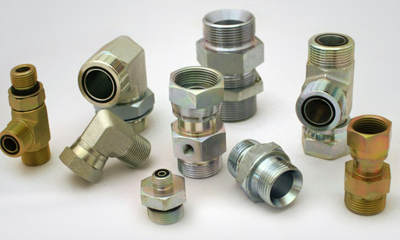
A hydraulic swivel is useful when a known machine motion would otherwise wind torsion into a hose. It is not a general cure for a line that is too short, routed below minimum bend radius, or connected with the wrong elbow. The design task is to identify the motion, decide where rotation belongs, and select a joint qualified for that duty.
Observe the equipment through its full cycle
Draw or record the position of both connection points at the limits of travel. Note the rotation axis, total angle, direction reversals, speed, cycles, pressure during movement, vibration, and any pull from hose weight. Watch for the stripe or layline on the hose rotating around its axis; that is direct evidence of torsion.
Cylinder extension, steering movement, booms, grapples, mining attachments, reels, and robotic or automated equipment can all create complex hose motion. A longer loop sometimes controls the bend, but adding length can also create snagging, abrasion, excess mass, and delayed response. Geometry has to be tested on the actual machine.
Distinguish connection alignment from live rotation
Many hose ends have a swivel nut that allows the connection to be tightened without rotating the hose. That feature is primarily for installation. Unless its product data explicitly permits dynamic movement, it should not be expected to turn repeatedly while pressurized.
A live hydraulic swivel contains a sealing and bearing arrangement intended for rotation or oscillation in operation. Its internal design varies. The selection must state whether motion is continuous or intermittent and whether the joint rotates at zero, low, or full system pressure.
Locate the swivel to reduce side load
Place the rotation axis where it follows the machine’s natural motion. Misalignment can push the housing sideways, raise breakaway torque, and load the hose connection. The joint should not carry structural weight unless the manufacturer has rated it for that load.
Sometimes two planned bends or a different port orientation perform better than one swivel. In other layouts, a swivel can remove a damaging twist and reduce the number of elbows. Compare pressure drop, envelope, guarding, service access, and the consequences of joint leakage before deciding.
Specify the dynamic operating conditions
Provide working and surge pressure, flow, fluid, temperature, rotation speed, oscillation angle, cycle frequency, side and axial loads, port standards, materials, and environment. Check seal compatibility, allowable leakage, starting and running torque where relevant, and any restriction on rotating under pressure.
The assembly rating includes the swivel, adapters, hose, ends, and ports. A component advertised for high pressure is not automatically suitable for rapid rotation, abrasive contamination, subsea exposure, or a different fluid.
Inspect a moving joint differently from a fixed adapter
Inspection should look for external leakage, increasing torque, rough or loose movement, corrosion, damaged guards, hose twist, rubbing, and movement at the coupling. Trend results if the application is repetitive. Follow the manufacturer’s lubrication and seal-service instructions; adding an unapproved lubricant can damage seals or collect contamination.
When a swivel fails, preserve the routing and duty evidence. Replacing it with the same part will not correct side load, excessive speed, dirty fluid, or a joint installed on the wrong axis. A successful swivel installation is one where measured motion passes through the joint while the hose stays free of torsion, kinks, and uncontrolled contact.