
Instrumentation Around Sanitary Production: Measurement, Materials, and Validation
HGW Hydraulics on Jul 10th 2025
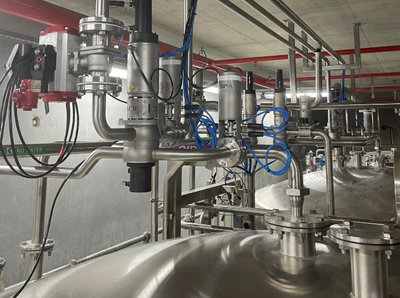
Food, beverage, and pharmaceutical production uses instrumentation to measure temperature, pressure, flow, level, conductivity, pH, weight, composition, and other variables that affect product and process control. Sensors depend on fittings, valves, tubing, housings, seals, wiring, and software that preserve the sanitary or controlled boundary.
The specification begins with what is measured and whether the component contacts product, cleaning fluid, utility media, or only the external environment.
Measurement purpose defines accuracy and location
A sensor should be placed where its reading represents the process state. Dead legs, poor mixing, heat loss, bubbles, plugged impulse lines, and slow response can make an accurate instrument report the wrong condition.
Define range, accuracy, repeatability, response time, drift, calibration interval, overpressure, temperature, and cleaning exposure. Alarm and control functions may require independent instruments or proof testing according to risk.
Product-contact components need hygienic geometry
Smooth cleanable surfaces, drainability, low hold-up volume, suitable welds, and seals that do not create crevices support sanitation. Ordinary hydraulic NPT, JIC, or ORB fittings should not be assumed sanitary because they are stainless.
Sanitary clamp, weld, aseptic, diaphragm, or other process connections must meet the equipment and industry requirements. A valve that isolates product may need a different body and cleaning design from a utility ball or needle valve.
Stainless grade is one part of material compatibility
304 and 316L stainless are common in compatible sanitary equipment. Molybdenum in 316 improves resistance in many chloride and chemical conditions; low carbon can support welded fabrication. More aggressive acids, solvents, or chlorides can require higher alloys, fluoropolymers, glass, or lined components.
Surface finish, passivation, electropolishing, heat-tint removal, weld filler, and fabrication contamination affect the finished surface. Elastomers and plastics must tolerate product, clean-in-place chemistry, steam or sterilization, and temperature.
Process skids integrate more than piping
Modular pilot and production skids can combine frames, vessels, pumps, instruments, valves, piping, insulation, controls, remote I/O, and motor cabinets. Layout must satisfy maintenance access, drainability, weight, transport, electrical separation, and safe operation.
Three-dimensional models and line-by-line reviews can find inaccessible instruments or undrainable runs before fabrication. Factory acceptance testing checks the integrated module against approved requirements; site testing confirms interfaces and actual utilities.
Regulation and quality systems control changes
Food and drug products are governed by applicable FDA regulations and other jurisdictional requirements. The exact obligations depend on product, process, and intended market. Temporary emergency policies from a past event are not a permanent manufacturing standard.
Design qualification, material traceability, calibration, cleaning validation, software change control, and installation/operational/performance qualification may apply. A supplier certificate should be tied to the exact requirement and lot.
Maintenance must restore the qualified state
Before replacing an instrument or fitting, verify line clearance, decontamination, zero energy, calibration status, seal material, orientation, and revision. Protect open product paths from particles and mixed materials.
After service, repeat the required leak, calibration, cleaning, and functional checks and update records. A physically compatible replacement can still change response time, dead volume, or validated chemistry.
Instrumentation protects product quality when measurement, sanitary geometry, materials, controls, and records are designed as one process boundary. Stainless steel supports that system, but cleanable design and verified use make it suitable—not alloy reputation alone.