
Instrumentation Tube Fitting Selection Starts with the Tube Specification
HGW Hydraulics on Oct 21st 2025
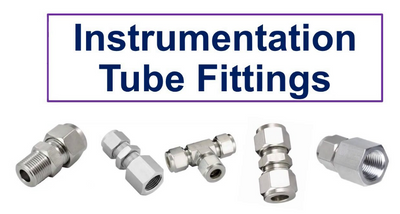
An instrumentation fitting cannot make an undefined tube reliable. The tube supplies the surface that ferrules grip and seal, the wall that carries pressure, and the material exposed to the fluid and environment. Selection should therefore begin with tube alloy, outside diameter, wall, hardness, surface condition, and dimensional tolerance.
Only then can a compatible fitting, ferrule system, pressure-temperature condition, and assembly procedure be confirmed.
Material compatibility has two directions
Check tube, fitting body, nut, ferrules, seals, and media together. Stainless-to-stainless combinations are common, but not every stainless grade has the same corrosion behavior. Copper, alloy tubing, polymers, coated steel, and other materials require approved fitting designs.
Mixing materials is not universally prohibited; engineered transition systems exist. It does require review of ferrule grip, hardness, galvanic corrosion, thermal expansion, and product approval. Do not create a mixed assembly from convenient loose parts.
Tube hardness controls ferrule action
The ferrule system must be able to grip the tube without uncontrolled cracking, collapse, or inadequate bite. Many fitting manufacturers specify maximum tube hardness and approved material conditions. Values such as Rockwell B limits are product-specific and should be taken from the current instructions.
Work-hardened, welded, heat-treated, or incorrectly annealed tube can behave differently even at the same alloy label. Verify certification and condition when the application requires it.
Wall thickness balances pressure and assembly
Tube pressure capability depends on OD, wall, material allowable stress, temperature, manufacturing quality, and governing design code. A wall that is too thin may deform under ferrule load; a wall that is too thick may exceed fitting or tube-preparation limits.
Gas service, vibration, thermal cycling, and severe consequences can require additional design factors and inspection. Use the fitting manufacturer’s approved tubing table rather than a generic calculation alone.
Surface and shape are sealing features
Longitudinal scratches, dents, weld seams, scale, paint, dirt, and out-of-round tube can cross the ferrule contact. Cut squarely, deburr inside and outside without excessive chamfer, and clean the end. Do not sand away defects until the tube falls outside dimensional control.
Use a tube cutter or saw process appropriate to the material. Avoid contamination of stainless with carbon-steel tools.
Temperature applies to every element
Fluid and ambient temperature affect tube strength, corrosion, ferrule load, seals, lubricant, and connected instruments. Thermal expansion can move long runs and load fittings. Support and route tubing to accommodate movement.
Soft seals or valves elsewhere in the assembly may set a lower limit than the metal fitting. Use the complete pressure-temperature rating.
Installation preserves the designed mechanism
Keep components from one approved fitting system together. Insert tube fully to the shoulder, hold alignment, and follow the specified nut-turn, gap-gauge, torque, or pre-setting procedure. Reassembly and remaking limits are manufacturer-specific.
Support tubing, avoid side load, and provide wrench access. Pressure-test and leak-test safely under the application procedure; never use a hand to find a high-pressure leak.
Procurement needs the tube and connection record
Specify tube standard, alloy, condition, OD, wall, hardness, surface, cleanliness, pressure-temperature duty, media, and documentation. Add fitting series, material, body shape, end connections, and installation tools.
Instrumentation reliability comes from matching a controlled ferrule system to controlled tubing. Starting with the tube specification prevents a well-machined fitting from being blamed for material, wall, hardness, or surface conditions it was never designed to accept.