
One-Piece and Two-Piece Hose Ends Are Inventory Architectures, Not Pressure Classes
HGW Hydraulics on May 25th 2022
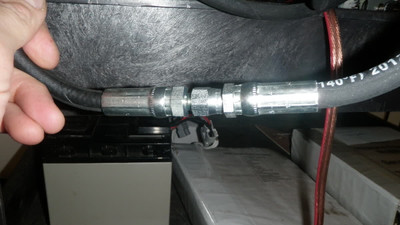
A one-piece hose end has its ferrule retained with the stem; a two-piece design stores stem and ferrule separately. This affects handling, inventory, and assembly error paths, but it does not make one style inherently low pressure and the other high pressure.
One-piece ends simplify component pairing
The attached ferrule reduces the chance of selecting a visibly similar collar from another family and can speed assembly. It still must be qualified for the exact hose series, size, crimp, fluid, pressure, temperature, and impulse duty.
An attached ferrule does not make maintenance foolproof or the joint reusable.
Two-piece systems increase configuration flexibility
Separate stems and ferrules can let a controlled stem family serve multiple qualified hose constructions using the correct collar. This can support braided, spiral, PTFE, thermoplastic, skive, or interlock systems where documented.
The flexibility adds selection risk. Part number, material, ferrule, skive, insertion, and crimp data must agree. Stainless material does not automatically provide longer life or higher pressure.
Standard and interlock tails are design-specific
Interlock stems and ferrules may engage inner and outer reinforcement in certain multi-spiral assemblies. Standard tails cover other qualified constructions. Do not assign by hose appearance or pressure label alone.
Balance stock with traceability
Two-piece inventory can reduce expensive stem quantities while holding more ferrules, but total cost includes identification, training, tooling, scrap, inspection, and replenishment. Keep components separated and link every permitted hose/stem/ferrule combination to a controlled crimp table.
Inspect for leaks, fitting movement, cover damage, and routing after installation. One-piece versus two-piece is an operational architecture; the qualified combination establishes performance.
Compare assembly error paths
A one-piece end reduces ferrule-selection steps but can still be installed on the wrong hose, with wrong insertion, die, orientation, or crimp diameter. A two-piece system adds a separate collar choice and may require skive or interlock preparation.
Use barcode, pick-list, or visual controls that confirm hose, stem, and ferrule part numbers before crimping. Color or general shape is not enough. Keep stainless and coated steel variants identified because identical geometry can have different material and torque requirements.
Do not treat the ferrule as reusable
Crimping permanently deforms ferrules and often affects the stem/hose interface. Reuse permissions are product-specific; a removed ferrule or hose end should not be returned to stock by default. Preserve failed assemblies for analysis and dispose of components according to procedure.
Match geometry to service access
One-piece ends may simplify field assembly where inventory and tooling are controlled. Two-piece ends can support broad special-material or hose coverage at a distributor. Neither benefit compensates for poor wrench clearance, wrong elbow clocking, tight bend radius, or port side load.
For high-impulse duties, verify the entire assembly’s qualification and whether skive/interlock preparation is specified. For PTFE or thermoplastic hose, use the exact fitting family rather than transferring rules from rubber wire-braid hose.
Review total inventory cost
Count stems, ferrules, hose series, sizes, end configurations, materials, slow-moving stock, shelf controls, and overseas replenishment. U.S. stock of verified common ends can support urgent repairs while rare combinations remain controlled-order parts.
First-article inspection and revision control are essential when a supplier changes manufacturing location or component source. Inventory savings are real only if the stored pieces still assemble into approved systems.