
Prepare Tube for Push-In Fittings Without Scratching the O-Ring or Collet
HGW Hydraulics on May 29th 2024
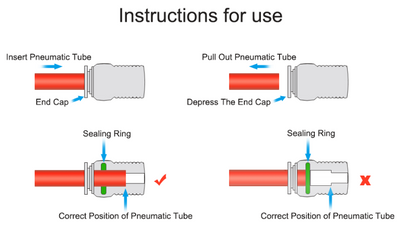
A push-in fitting is fast only after the tube and application have been verified. Its collet or gripping element must hold the tube while an internal seal contains the fluid or gas. A jagged cut, wrong outside diameter, surface scratch, or unapproved media can defeat either function.
Confirm the fitting family and application
Identify tube OD, material, wall, hardness, pressure or vacuum, temperature, fluid, movement, environment, and applicable standard. Pneumatic nylon tube, D.O.T. air-brake tubing, potable-water PEX, metal tube, and industrial coolant line do not use one universal push-in fitting.
Check whether a tube support, locking clip, special preparation, or restricted service is required. Use product-specific data; a fitting that accepts the tube physically may not be approved for the pressure, temperature, transportation, food, water, or chemical application.
Cut square and protect the sealing path
Use a clean cutter suitable for the tube. The end should be square, round, and free of cracks, flattening, and loose particles. Deburr the inside and outside as instructed without creating a long taper or gouge.
Do not add improvised serrations to the tube unless the fitting manufacturer explicitly requires a preparation process. Scratches along the area that passes the O-ring can create a leak path, while uncontrolled roughening can damage the collet or reduce tube strength.
Clean the tube and mark insertion depth when the instructions provide a dimension. Make sure the outside surface is compatible with the seal and grip.
Insert to the verified stop
Push the tube straight through the release collar and seal until it reaches the internal stop. A partial insertion can appear connected while leaving insufficient grip or seal contact. Pull back gently only as the product procedure uses to verify retention.
Avoid side load, excessive bend near the fitting, and tube movement that works the collet. Supports and minimum bend requirements still apply. Restore pressure from a protected position and perform the specified leak or functional check.
Release without forcing the body
Depressurize and control stored energy. Many designs release when the collar or collet is pressed evenly while the tube is withdrawn. Some require a dedicated tool or sequence. Use it rather than prying the collar, twisting with pliers, or pulling against pressure.
Inspect the removed tube for scoring and cut back to sound material only if length, bend, and manufacturer instructions permit. Examine the collet and O-ring; not every fitting is field-serviceable or reusable.
Compare with compression fittings by duty
Push-in and compression connections use different retention and sealing systems. Compare application approval, tube material and wall, pressure, temperature, vibration, disassembly frequency, tooling, envelope, and inspection. Neither is automatically safer or faster across every installation.
For purchasing, specify the full fitting series, tube, size, media, duty, seal material, threaded end, and required approval. Correct tube preparation and controlled removal allow the intended push-in convenience without treating every collar-style connection as interchangeable.