
Specify Push-to-Connect Fittings as a Tube-and-Seal System
HGW Hydraulics on Apr 29th 2021
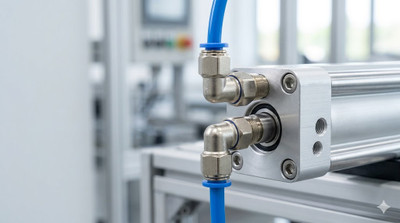
A push-to-connect fitting does not work with every tube that fits through its release collar. The tube outside diameter, material, hardness, surface, wall, preparation, and support interact with the collet or teeth and O-ring. The body material is only one part of that system.
Selection should begin with the media and tube, then verify fitting construction and approvals for the exact application.
The grip and seal perform separate jobs
Insertion moves the prepared tube through a release mechanism and past an O-ring. An internal collet, grab ring, or teeth retain the tube while the elastomer seals on its outside surface. Some designs include tube support or a positive stop.
Cut the tube square, remove burrs, and keep the sealing length free of scratches, paint, ovality, or contamination. Push to the specified depth and perform the required pull or inspection check.
Releasable designs use a collar or tool to retract the grip. Other fittings are intended as permanent or limited-remake connections. Twisting a tube out can damage teeth, O-ring, or tube and is not a universal removal method.
Match body material to media and environment
Push-in bodies can be aluminum, brass, nickel-plated brass, stainless steel, engineered polymer, composite construction, or another qualified material. Each has specific pressure, temperature, corrosion, impact, thread, and regulatory limits.
Polymer bodies can reduce mass and resist selected chemicals, while metal bodies can provide different strength, temperature, thread, and environmental behavior. Plating can be damaged, stainless can gall, and brass can be restricted in some fluids or regulations.
Use the manufacturer’s compatibility and rating data rather than a hierarchy that calls one material universally durable.
Tube families are not interchangeable
Polyethylene, nylon, polyurethane, PEX, CPVC, PEEK, fluoropolymer, copper, brass, and stainless tube have different hardness, wall, dimensional, temperature, and chemical behavior. A fitting made for pneumatic polyurethane tube may not retain PEX or metal tube safely.
Some designs require a tube insert; some metal-tube systems use a groove or special preparation. Those requirements belong to the product system and should never be improvised. Confirm the permitted outside diameter tolerance and minimum wall.
Water and beverage service requires exact approvals
Water purification, reverse osmosis, beverage dispensing, ice making, recreational vehicles, marine systems, and car-wash equipment can use push-in fittings. Potable-water, food-contact, or sanitation requirements depend on the exact wetted materials and certification.
An FDA-compliant ingredient statement and an NSF listing are different forms of evidence. NSF/ANSI 51 and NSF/ANSI/CAN 61 address different scopes. Verify the finished fitting, tube, O-ring, and application listing rather than assuming white polypropylene and EPDM are automatically compliant.
Cleaning chemicals, temperature, stagnation, taste/odor, and pressure cycling must also fit the approved use.
Pneumatic, hydraulic, plumbing, and air-brake duties differ
Push-to-connect appears in compressed air, vacuum, low-pressure fluid, process control, mobile equipment, plumbing, and plastic air-brake tubing. Similar appearance does not make these fittings interchangeable.
Hydraulic duty can require substantially different pressure and impulse qualification from common pneumatic products. Vehicle air-brake fittings and tubing have specific performance and marking requirements. Building plumbing may be governed by codes and listings.
Identify the service before selecting a connection from a size chart.
Installation includes the opposite port and routing
Verify the fitting’s NPT, BSP, metric, straight-thread O-ring, or other port end separately. Apply only the approved sealant or O-ring method. Hold the body with a backup wrench and avoid transferring torque into the tube.
Route within bend-radius and support requirements, away from heat, abrasion, and pull. A side-loaded tube can distort the O-ring contact or release mechanism. Leave access to the collar only when service removal is intended.
Push-to-connect fittings save assembly steps when the tube, grip, seal, body, port, and application are specified together. Ease of insertion is an installation feature; verified compatibility and rating create the reliable connection.