
Hydraulic Hose Assembly Compatibility: STAMP, Skiving, Ferrules, and Materials
HGW Hydraulics on Nov 25th 2021
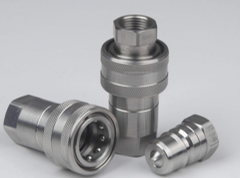
A hydraulic hose fitting is not selected as an isolated metal part. The hose, fitting stem, ferrule, crimp dimensions, sealing connection, and service conditions form one assembly. If one component is mismatched, the assembly may be limited by that component even when every other part has a higher individual rating.
The selection process is more reliable when it moves from system requirements to assembly design and then to production verification. That sequence prevents a familiar mistake: choosing a fitting because its thread matches the machine while overlooking whether its stem and ferrule are approved for the hose.
Define the operating envelope with STAMP
STAMP organizes the first five requirements: Size, Temperature, Application, Media, and Pressure.
Size includes hose inside diameter, required flow, machine-port size, fitting dash size, and the effect of any reducer or elbow. A hose that is too small can increase velocity and pressure loss. A fitting that matches the thread but restricts the bore may become the controlling point in the line.
Temperature covers both the fluid and the environment around the hose. An assembly near an engine, furnace, winter work area, or refrigerated process can see conditions very different from the reservoir temperature. Hose tube, cover, seals, and fitting materials all need suitable ranges.
Application describes motion, vibration, impulse cycles, bend radius, abrasion, routing, external load, and the consequence of failure. A stationary industrial line and an excavator boom may use the same nominal connection but demand different hose construction and protection.
Media means the hydraulic fluid or other material moving through the hose, plus cleaning chemicals or external exposure that can contact the cover and fittings. Compatibility must include the tube, seals, fitting material, and plating.
Pressure includes normal working pressure, expected surges, and any vacuum or suction condition. The finished assembly is governed by its lowest-rated approved component and by the assembly procedure, not by the largest number printed on one part.
Choose the hose and fitting system together
Once STAMP is known, select a hose family that meets the operating envelope and an approved fitting system for that hose. The hose manufacturer or validated assembly specification should identify the stems, ferrules, crimp dies, target crimp dimensions, preparation method, and inspection requirements.
A fitting from one product family should not be assumed compatible with a visually similar hose or ferrule from another family. Small differences in stem serrations, insertion depth, ferrule length, hose wall, and reinforcement position can change how the crimp load is transferred.
The machine-side connection is a second interface. Confirm whether the assembly ends in JIC, ORFS, ORB, NPT, BSP, DIN or another metric connection, flange, straight thread with a washer, fixed end, or swivel. The thread and seat must both match; thread engagement alone does not prove sealing compatibility.
One-piece and two-piece hose ends solve different production needs
In a one-piece hose fitting, the ferrule is attached to the stem as a matched unit. This reduces the chance that an assembler selects the wrong loose ferrule and can simplify high-volume or field production when the approved hose-and-fitting program calls for that design.
A two-piece fitting uses a separate stem and ferrule. That arrangement can provide more configuration options for particular wire-braided or spiral-wire hose families and is common in applications where the ferrule must be selected for a specific hose construction or preparation method.
Neither design is automatically stronger or safer in every application. Suitability comes from the tested combination and the assembly instructions. A two-piece stainless fitting does not make an unapproved hose compatible, and a one-piece design does not remove the need to verify insertion, crimp diameter, and end connection.
Skiving is a specification, not a shop preference
External skiving removes part of the hose cover near the fitting so the ferrule can engage the reinforcement as designed. Internal skiving removes inner-tube material where the stem enters the hose. Some high-pressure or multi-spiral assemblies use both internal and external preparation to create the intended contact between fitting components and reinforcement.
Other hose-and-fitting systems are specifically designed for no-skive assembly. Removing material from a no-skive hose can damage it, while skipping required skiving can prevent the ferrule and stem from gripping the reinforcement correctly.
The decision must come from the approved combination. Record the skive length and diameter, inspect for cut or displaced reinforcement, keep debris out of the hose, and use the specified tooling. An assembler should not infer the preparation from another hose with a similar outside diameter.
Select fitting material from the fluid and environment
Carbon steel, stainless steel, brass, and engineered polymers serve different conditions. Carbon steel fittings are widely used in hydraulic equipment and may use protective finishes for corrosion resistance. Stainless steel is selected where corrosion, chemical exposure, washdown, marine service, or material policy justifies it. Brass can suit compatible, less severe fluid or pneumatic applications. Polymer fittings require an application and pressure range specifically designed for them.
Material choice should be based on current manufacturer data rather than a universal pressure or temperature number. Geometry, size, wall thickness, connection style, alloy, heat treatment, seal, and production method all affect the rating. Stainless steel also requires attention to galling, compatible lubricants, and correct assembly practice.
For corrosive service, consider the complete connection. A stainless fitting attached to a poorly protected carbon-steel adapter may simply move the corrosion problem to the next component. Fluid compatibility and galvanic exposure may also affect seals, tube, clamps, and equipment ports.
Apply the process to real replacement situations
On construction equipment, a failed boom hose may need high impulse capability, abrasion protection, a specific bend radius, and an elbow orientation that clears the structure through full articulation. Copying only the old hose length and thread can produce an assembly that twists or rubs when the boom moves.
In a washdown or chemical-processing area, the material decision may be driven by external chemicals as well as the fluid inside the hose. Stainless fittings, compatible seals, an appropriate hose cover, and isolation from dissimilar metals may all be part of the same solution.
For a mixed fleet, repeated replacements benefit from a controlled record. Store the machine, circuit location, hose series, length, end connections, orientation, fitting and ferrule numbers, skive instruction, crimp specification, material, and revision. Common assemblies can be stocked in the United States based on usage, while low-frequency sizes can be replenished from an approved drawing or sample without guessing at the configuration.
Verify the completed assembly before release
Before crimping, inspect the hose for damage and confirm that the correct components and dies are present. Mark insertion depth where the procedure calls for it. After crimping, measure the specified crimp diameter at the required locations and check fitting position, orientation, cover condition, cleanliness, and identification.
Pressure testing, proof testing, cleaning, capping, and documentation should follow the governing hose program and application requirements. A visual check cannot establish every internal condition, and a test does not make an unapproved component combination acceptable.
Batch or work-order traceability is useful when assemblies are produced in quantity. If a dimensional or material problem is found later, the affected parts can be isolated and replaced without treating every similar-looking assembly as identical.
Release a documented assembly, not a collection of parts
STAMP defines the service. The hose-and-fitting program defines compatibility. One- or two-piece construction, skiving, material, end connection, and crimp data then turn those requirements into a buildable assembly. Keeping that sequence intact gives buyers and technicians a clear basis for replacement and prevents the thread on the machine from becoming the only selection criterion.