
Pressure Washer Hose Construction for Commercial and Industrial Cleaning
Nov 9th 2022
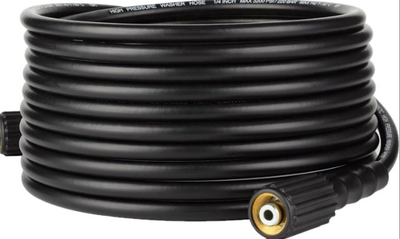
A pressure washer hose has to contain high-pressure water while being dragged, coiled, stepped near, exposed to cleaning chemicals, and repeatedly flexed at the gun and machine. Reinforcement helps carry pressure, but a durable assembly depends on how the inner tube, braid, cover, couplings, and routing work together.
Commercial washing, vehicle cleaning, agricultural maintenance, and industrial surface preparation place different demands on the hose. The correct assembly is not simply the one with the largest pressure number. It must match the pressure washer, water temperature, cleaning media, length, connection type, movement, and consequence of a failure.
Read the hose as a layered pressure component
The inner tube carries water and any approved detergent. Synthetic rubber and thermoplastic materials are common, each with its own temperature, chemical, flexibility, and permeation behavior. Hot-water cleaning requires a hose specifically rated for the operating temperature; reinforcement does not protect an unsuitable tube from heat.
One or more reinforcement layers surround the tube. Textile or synthetic braid can provide strength with lower weight and flexibility. Steel-wire braid is used in hose designed for demanding pressure and impulse service. The number and material of braids do not establish the rating by themselves; construction, size, fittings, and manufacturer qualification control the finished assembly.
The outer cover protects reinforcement from abrasion, weather, oil, cleaning agents, and handling. A cut through the cover can expose wire or textile to damage even when the hose has not leaked. Cover compounds vary, so claims about ozone, chemical, or abrasion resistance should be checked for the exact hose.
Duty cycle explains why reinforcement matters
Occasional residential driveway cleaning is different from a wash bay operating through long shifts. Frequent pressure cycles, continuous dragging across concrete, contact with vehicle edges, and repeated coiling can age a hose faster than static pressure alone suggests.
In industrial cleaning, the hose may reach around fixed machinery while the pressure washer remains in one location. Longer length improves access but can add weight, increase handling friction, and affect system performance. Use the equipment manufacturer's allowed hose range and avoid assuming that reinforcement eliminates all length-related losses.
Agricultural and transportation work introduces mud, grit, oils, and sharp equipment edges. A hose route that crosses vehicle traffic or pinch points is unsafe regardless of cover quality. Guards, reels, overhead routing, or work-area control may be more effective than repeatedly replacing an abraded line.
Pressure and temperature must match the complete assembly
The hose working-pressure rating should meet the pressure washer's requirements with the correct service factor and temperature condition specified by the manufacturer. Do not use burst pressure as normal working pressure. Couplings, adapters, swivel joints, spray gun, and fittings must be rated for the same service.
Hot water can reduce the allowable pressure or life of some hose materials. Cleaning chemicals may affect the inner tube, cover, seals, or plated fittings. Confirm both internal exposure and overspray on the outside of the line.
A steel-braided appearance is not proof of a particular rating. Layline markings, product data, and traceable assembly records are more reliable than cover texture or color.
End fittings are common stress points
Pressure washer hose assemblies often use permanently crimped couplings or a field-attachable system designed for the exact hose. The stem, ferrule or socket, thread, seal, and crimp specification must be compatible. A plumbing adapter that matches the thread may lack the required pressure, flow path, or sealing arrangement.
Movement concentrates near the gun and machine connections. Bend restrictors or strain-relief sleeves can support this area and reduce sharp flexing immediately behind the coupling. They cannot correct a hose that is pulled tight, twisted during installation, or forced around a radius below its limit.
Inspect for cover separation, wire exposure, corrosion at the ferrule, leakage, a loose coupling, blistering, kinks, and soft or hardened sections. A damaged high-pressure hose should be removed from service under the equipment and hose supplier's safety procedure rather than patched with tape or a general clamp.
Flexibility affects safe handling
More reinforcement can increase strength but may also add weight and stiffness. A hose that is difficult to maneuver can encourage tight bends, dragging, or unsafe operator posture. Compare minimum bend radius, outside diameter, mass, and low-temperature flexibility along with pressure capability.
Swivel connections, hose reels, and appropriate length can reduce tangling when specified correctly. Lay the hose out before pressurizing so loops do not tighten under load. Keep it away from exhaust surfaces, sharp edges, moving vehicles, and areas where people can trip.
Storage matters after the work ends. Release pressure according to the machine instructions, drain where required, and coil the hose at a radius that does not kink it. Clean abrasive grit from the cover before winding it onto a reel.
Match construction to the cleaning environment
Vehicle and fleet washing needs flexibility, repeated handling durability, and compatibility with detergents. Commercial building and concrete cleaning may emphasize abrasion and long operating hours. Farm equipment cleaning adds mud, oils, uneven ground, and outdoor storage. Industrial surface preparation can require more demanding pressure, temperature, or chemical controls.
These examples do not justify one universal “heavy-duty” hose. Record the washer model, allowed pressure and temperature, flow, hose length, end connections, media, environment, and duty cycle. Then compare approved assemblies using those inputs.
For U.S. service operations, commonly used hose lengths and connection combinations can be stocked locally when their identity and revision are controlled. Less common assemblies should remain tied to equipment records so urgency does not lead to a visually similar substitution.
Service life is an operating result, not a fixed promise
A reinforced hose may cost more than a light-duty alternative and may last longer in an application that actually uses its abrasion and impulse capability. It can also fail early if it is overheated, driven over, chemically attacked, or assembled with the wrong ends. Environmental benefit from fewer replacements depends on real service life, not the reinforcement label.
Track removal reason and damage location. Repeated failure at the gun suggests bend or handling stress; damage along one section suggests routing or abrasion; coupling leakage calls for assembly and thread inspection. That record supports a useful correction instead of purchasing the same hose again.
The best pressure washer hose is the assembly that remains compatible through pressure, heat, chemicals, handling, and storage. Reinforcement is central to that performance, but only as part of a controlled hose-and-fitting system.