
Select ORFS as a Complete Connection, Not Just a Face Seal
HGW Hydraulics on Apr 5th 2022
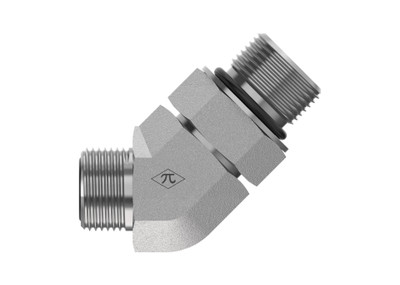
ORFS geometry can control leakage by compressing an O-ring between flat faces, but the seal is only one component in the pressure boundary. The fitting body, nut, tube or hose end, material, routing and mating port must support the same service.
Selection should begin with the circuit rather than with a promise that one connection style is always best.
Confirm the interface and conductor
Identify the applicable ORFS standard, nominal conductor size, thread, face dimensions and O-ring. Determine whether the mating half is a hose end, formed tube assembly or adapter and whether it has adequate straight length and support.
The complete conductor assembly cannot exceed its lowest-rated component. Tube OD and wall, hose construction, end attachment and port all remain part of the pressure check.
Build a pressure and temperature envelope
Record normal and credible transient pressure, startup and stabilized fluid temperature, ambient heat and duty cycle. Use product ratings for the exact size, material and assembly.
Do not assume every ORFS component follows one design ratio or that a severe application can be made acceptable with an informal derating percentage. Apply the governing standard, manufacturer data and system design requirements.
Temperature limits come from more than the metal body. O-ring compound, hose, tube, plating and fluid can establish a lower boundary.
Select the O-ring from the actual media
Hydraulic oil family, water content, fire-resistant fluid, cleaners and external chemicals can affect elastomers differently. Choose the compound through documented compatibility and the temperature range.
Color alone is unreliable unless the product system defines it. Preserve part identity and keep seals clean, protected from damage and within their storage guidance.
Divide internal and external corrosion zones
Coated steel can suit many hydraulic environments when the finish and maintenance exposure are appropriate. Stainless steel may be justified for marine, washdown or chemical surroundings, but the exact alloy and seal still require review.
Metal substitution can change galling behavior, torque data, galvanic contact and product rating. Do not treat stainless as a drop-in cure for every corrosive service.
Control velocity, contamination and geometry
Size the bore for required flow and acceptable pressure loss. Excessive local velocity, abrupt reduction or a poorly selected elbow can add heat and dynamic forces.
Keep faces and O-ring grooves clean during assembly. Contamination can cut the seal or hold the faces apart. Align conductors so the nut does not pull a rigid tube or hose sideways.
Vibration and shock should be addressed through routing, clamps, supports and circuit behavior as well as connection choice. An ORFS joint cannot compensate for an unsupported adapter stack.
Specify the replacement as a record
Capture both ends, body shape, material, seal compound, pressure and temperature requirement, conductor, orientation and tightening method. If a special configuration is produced overseas and stocked in the United States, use drawing revision, first-article approval and lot traceability to preserve the design.
ORFS is valuable because the elastomeric face can accommodate controlled assembly variation. Its performance remains a property of the verified connection, not the acronym by itself.