
Skive Hydraulic Hose Only When the Qualified Fitting System Requires It
HGW Hydraulics on May 17th 2022
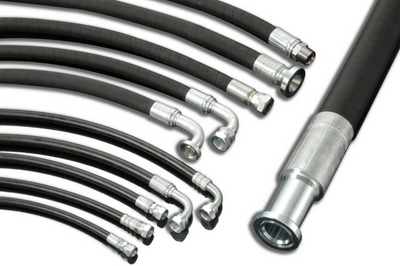
Skiving is not an upgrade applied according to pressure alone. It is a controlled preparation step for a specific hose-and-fitting system. Removing cover or inner-tube material from a non-skive design can destroy the assembly just as surely as skipping a required skive.
External and internal skives serve designed interfaces
External skiving removes a specified length and depth of cover so the ferrule can engage the reinforcement as designed. Internal skiving removes a controlled portion of tube for certain interlock stems. Some high-impulse systems use both; other equally demanding systems are engineered without either.
Use the hose/fitting manufacturer’s tooling, dimensions, and procedure. “Metal-to-metal” is not proof of correct retention.
Non-skive means the cover remains by design
A non-skive stem and ferrule are built and qualified to grip through the intact cover. This can reduce preparation time, debris, and errors, but does not limit the assembly automatically to low pressure.
Never improvise a crimp when specifications are missing. Pressure testing an experimental combination does not create full impulse, temperature, and production qualification.
Control preparation evidence
Verify hose series and size, stem, ferrule, skive length/depth, insertion mark, crimp diameter, die, tool calibration, cleanliness, and inspection. Over-skiving can cut reinforcement or tube; under-skiving can prevent proper engagement.
Remove skive debris from the bore and protect ends. Record assembler and batch where required.
After installation, inspect coupling position, leakage, bend near the end, and routing. Skive only because the documented assembly design requires it—not because a generic article calls one method stronger.
Match tooling to the hose and depth
Hand knives can create uneven depth, tapered edges, and reinforcement damage. Production skiving equipment should use the correct mandrel, blade, stop, and diameter setting. Inspect tooling wear and confirm the prepared length and circumference before inserting the stem.
Internal skiving deserves special cleanliness control because removed tube material can remain in the bore. A cut too deep can expose or damage reinforcement and change the fluid interface. Follow the exact hose-system limits rather than a visual metal exposure target.
Diagnose coupling movement by assembly stage
If a fitting displaces, check hose identity, ferrule/stem pairing, skive dimensions, insertion, crimp diameter, die selection, machine calibration, and operating pressure/impulse. Do not assume the absence or presence of skiving is the only cause.
Cutting apart a failed end may be required for investigation, but first preserve orientation, measurements, photographs, and production records. Compare with a retained approved assembly.
Qualification extends beyond a proof test
A one-time pressure hold can detect some gross faults but does not replace impulse, burst, leakage, temperature, dimensional, and production-validation requirements. Never develop field crimp values through trial and error on a customer machine.
For recurring supply, control hose, fittings, tools, crimp tables, drawing revisions, assembler training, and batch traceability. If any component source changes, review whether qualification must be repeated.
Protect the prepared end before crimping
Skived reinforcement can corrode or collect dirt if left exposed. Limit delay, keep ends clean and dry, and assemble within the procedure. Non-skive ends also need caps and clean handling because insertion can push debris into the hose.