
Using STAMP to Define a Hydraulic Fitting Before Ordering
HGW Hydraulics on Jan 3rd 2024
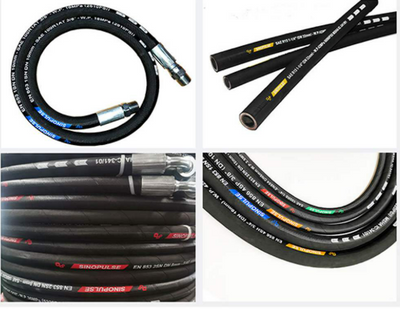
STAMP is a compact way to collect the conditions a hydraulic fitting must satisfy: size, temperature, application, media, and pressure. It does not select a part automatically. It prevents the buyer from choosing by thread label while leaving the tube, seal, environment, or pressure cycle undefined.
Use STAMP at the system boundary where the fitting will be installed. Record the two mating components and the actual operating conditions, then compare them with data for the complete connection.
Size includes flow path and wall condition
For tube fittings, record tube outside diameter and wall thickness as well as the connection size. A flared tube needs enough material and the correct preparation to form its seat; a flareless bite-type connection has its own wall, hardness, and assembly requirements.
For hose, record nominal inside diameter, exact hose series, stem and ferrule system, and crimp specification. For ports and adapters, identify thread diameter, pitch, taper, seat or O-ring, and nominal dash or pipe size.
Check internal bore and acceptable flow loss. A reducer or compact elbow can become the restriction even when both external ends have familiar size labels.
Temperature applies inside and outside
Fluid temperature and ambient temperature can differ substantially. A hose near an exhaust, a fitting in a freezer, or a port exposed to washdown may see conditions not shown by the reservoir gauge.
Temperature affects fitting material, plating, hose tube and cover, O-rings, bonded seals, thread compound, and lubricant. Use product-specific limits and account for combined temperature and pressure. Broad material tables cannot replace the exact component data.
Thermal cycling also moves tube and hose and changes seal compression. Routing and support should accommodate that movement without loading the connection.
Application describes the duty cycle
State whether the circuit is static or moving, how often pressure cycles, and whether it sees vibration, shock, vacuum, abrasion, washdown, sunlight, salt, chemicals, or impact. Note maintenance access, wrench clearance, hose bend radius, orientation, and the consequence of leakage.
The application may favor a serviceable JIC swivel, ORFS face seal, ORB port, flange, flareless tube connection, or another system. No connection family should be chosen from a one-line generalization; verify the component and equipment requirements.
Regulatory, cleanliness, fire, gas, food, or safety requirements also belong here. They may control approved materials, testing, assembly, and records beyond normal hydraulic practice.
Media determines every wetted material
Identify the exact liquid or gas, concentration, additives, contamination controls, and cleaning agents. Compatibility includes the fitting body, tube or hose, O-ring, backup ring, bonded seal, sealant, lubricant, and any protective coating exposed internally.
Petroleum hydraulic oil does not represent all hydraulic fluids. Water-glycol, phosphate ester, fuel, air, refrigerant, chemical, and process media can require different elastomers and materials. Use current compatibility data and confirm uncertain service with the equipment and component suppliers.
External media matters too. A fitting compatible with the conveyed oil can corrode from road salt or chemical washdown.
Pressure means more than the normal gauge reading
Record maximum working pressure, spikes, impulse frequency, relief setting, vacuum, and any test condition. The allowable pressure is limited by the lowest-rated connected component and can change with size, material, temperature, body shape, tube wall, and hose assembly.
Do not use burst pressure as working pressure or apply a universal design factor without the governing standard and manufacturer data. Correct tightening is important, but torque does not increase an underrated component’s capability.
Where a failure can injure personnel, release hazardous media, or disable critical equipment, the design and validation requirements should reflect that consequence.
Add ends and delivery to close the gaps
Many teams extend STAMP to STAMPED. “E” defines the complete ends: standard, size, gender, seal, body form, and orientation on both sides. “D” captures delivery details such as assembly length, cleanliness, pressure test, caps, labels, packaging, documentation, and required date.
These additions prevent a technically compatible fitting from arriving with the wrong elbow direction, material record, or cleanliness condition. They also create a receiving checklist.
Turn the answers into a traceable line item
Attach the STAMP record to a drawing, verified sample, or equipment part number. Keep revisions controlled and require approval before substituting a seal, material, thread, or body configuration. At receiving, compare the actual sealing surfaces and markings with that definition.
STAMP works because it changes the question from “what fitting looks right?” to “what complete connection survives this service?” Used that way, it improves selection without pretending five letters can replace standards, component ratings, or engineering judgment.