
Tractor Hydraulic Connections from Attachment Couplers to Permanent Hose Ends
HGW Hydraulics on May 29th 2025
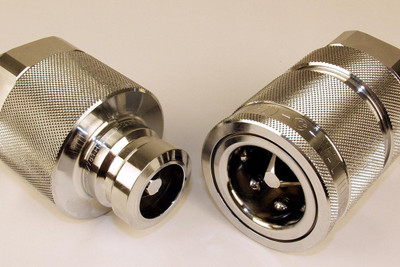
Tractors power loaders, balers, plows, mowers, planters, sprayers, backhoes, and other attachments through hydraulic circuits. The connection used at an attachment breakaway point has a different job from the permanent hose ends routed along a boom or implement.
Quick couplers support frequent connection. JIC and ORFS commonly create fixed serviceable joints elsewhere in the line. Identifying those roles prevents a convenient coupler from being treated as a universal hose fitting.
Attachment interfaces prioritize repeated connection
Agricultural quick couplers use a plug and socket with locking elements, seals, and internal valves. ISO 5675 and ISO 7241 series profiles appear in agricultural and general hydraulic equipment, but the exact series and interchangeability must be confirmed.
Depressurize tractor and implement lines before connection. Residual pressure from heat or cylinder load can make coupling difficult; forcing the halves can damage valves and seals. Connect-under-pressure products have defined designs and limits and should not be assumed from appearance.
Clean both faces, insert fully, confirm positive lock, and route hoses away from the PTO, tires, hitch, sharp edges, and pinch points. Cap disconnected halves immediately.
Permanent lines need an inspectable seal
JIC fittings use straight threads to clamp a 37-degree metal flare. They are widely available and provide a visible seat. Reassembly is conditional on clean, undamaged faces, serviceable threads, alignment, and the applicable tightening procedure—not a blanket rule that every JIC joint is single-use or indefinitely reusable.
ORFS places an O-ring in a groove on a flat male face and uses a female swivel. The face seal can perform well in pressure-cycling and vibration when the O-ring, groove, flat, threads, and hose routing are correct. Replace damaged or unknown seals with the specified size and compound.
Neither family has one universal tractor pressure rating. Use the exact fitting, hose, size, temperature, and manufacturer data.
The tractor may contain other standards
ORB ports, NPT, BSP, metric, flange, and OEM-specific connections can appear on pumps, valves, cylinders, and imported implements. A purpose-designed adapter can bridge standards while preserving each seal.
Do not identify a port from tractor color, brand, or thread engagement. Measure pitch and diameter, check taper, inspect the seat or O-ring, and consult the equipment parts information.
Route for every hitch and loader position
Three-point hitches, articulated loaders, folding implements, and steering movement change hose length and bend. Cycle the equipment through its safe range and check for tension, twist, rubbing, crushing, and insufficient bend radius.
Use clamps, sleeves, spring guards, or other protection for the identified hazard. A guard does not correct an incorrectly short hose. Keep heavy adapter stacks from levering valve ports.
Field service begins with stored energy
Lower and support attachments, shut down, lock out as required, and operate controls according to the manufacturer procedure to relieve pressure. Accumulators, loaded cylinders, and thermal expansion can retain energy.
Never use a hand to locate a leak. Inspect coupler locks, valve faces, hose covers, crimps, fittings, O-rings, flare surfaces, corrosion, and clamps. Replace an assembly that shows damage beyond the approved service criteria.
Record hose ID, length, both ends, orientation, coupler series, material, crimp data, and tractor/implement location. This avoids repeated emergency identification during planting or harvest.
Tractor hydraulics are most serviceable when the connection matches its frequency of use: clean positive-lock couplers at attachment boundaries and correctly routed JIC, ORFS, or other specified ends throughout the permanent circuit.