HGW Resources

HGW Blog

Practical guides for identifying hydraulic fittings, comparing connection styles, checking applications, reviewing materials, and finding relevant HGW product categories.

Fitting Guides

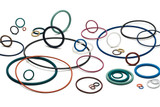
Match Hydraulic O-Ring Compounds to Fluid, Temperature, and Motion

HGW Hydraulics on Feb 9th 2021

There is no single “best” hydraulic O-ring material. A compound that performs well in petroleum oil may swell in another fluid, while a chemically resistant elastomer may have poor low-temperature response, abrasion behavior, or cost for the application. Selection must combine the base polymer with compound formulation, hardness, seal geometry, pressure, temperature, motion, surface finish, and th
Fitting Guides

Choose Tube Fittings by Tube Preparation, Seal, and Service Duty

HGW Hydraulics on Feb 4th 2021

“Instrumentation” and “industrial” are useful market labels, but they do not tell an assembler how a tube end seals. A better selection starts with the tube specification and asks what preparation, grip, sealing surface, and inspection the connection requires. The fitting, tube, ferrules or sleeve, nut, and installation procedure form one system. Mixing visually similar parts or applying one make-
Fitting Guides

Identify Hydraulic Fittings from the Seal Before Naming the Thread

HGW Hydraulics on Jan 27th 2021

The fastest way to misidentify a hydraulic fitting is to begin with a thread that “looks about right.” Threads may only pull a joint together while an O-ring, flare, flat face, flange seal, or tapered interference contains the fluid. Two connections can have similar diameters and entirely different sealing mechanisms. A reliable identification process begins at the seal, then uses thread and dimen
Fitting Guides

Specify Compression Tube Fittings as a Matched Body, Ferrule, and Tube System

HGW Hydraulics on Jan 21st 2021

Compression and instrumentation tube fittings use a nut and one or more ferrules to grip unflared tube and create a pressure boundary. Their performance comes from the complete geometry and tube specification, not a general rule that two ferrules always handle more pressure than one. Compare designs by their qualified system A single-ferrule design uses one element to develop its specified grip an
Fitting Guides

Identify 11 HGW Hydraulic Fitting Families by Their Seal Location

HGW Hydraulics on Jan 12th 2021

The fastest way to narrow a hydraulic replacement is to find where the connection contains pressure. Thread diameter is secondary: some threads seal by interference, while others only clamp a flare, face, ferrule, washer or O-ring. HGW organizes common products into 11 practical families. Grouping them by seal location makes near-match errors easier to detect. Metal-seat and tube-grip connections