
HGW Resources

HGW Blog

Practical guides for identifying hydraulic fittings, comparing connection styles, checking applications, reviewing materials, and finding relevant HGW product categories.

Applications

Coordinate Overseas Fitting Production with U.S. Service Inventory

HGW Hydraulics on Jul 29th 2026

Factory geography does not determine whether a hydraulic fitting reaches a U.S. customer correctly and on time. Reliability comes from connecting one technical definition to manufacturing, inspection, international movement, local inventory and exception handling. An overseas factory and a U.S. warehouse can function as one supply system when their records and planning clocks agree. Freeze the par

Fitting Guides

Select a Solenoid Valve from Its De-Energized State and Pressure Differential

HGW Hydraulics on Jul 22nd 2026

A solenoid valve combines an electromagnetic operator with a fluid-control element. An electrical command moves an armature or plunger, which directly changes a seat or pilots a larger valve stage. The first selection question is what flow path the valve must create when power is absent. Draw the normal and energized flow paths “Normally closed” means the specified passage is blocked in the de-ene
Applications

Specify a Hydraulic Cylinder from the Load Path to the Port Connection

HGW Hydraulics on Jul 14th 2026

A hydraulic cylinder converts fluid pressure and flow into linear force and motion, but bore and stroke are not enough to specify one. The load path, mounting geometry, rod stability, speed, duty cycle, cushioning, seals, ports, environment, and safe load-holding method determine whether the cylinder will work reliably in the machine. Selection should begin outside the cylinder—with the moving str
Applications

Trace Aircraft Hydraulic Power from Reservoir to Actuator and Return

HGW Hydraulics on Jul 8th 2026

An aircraft hydraulic system converts stored fluid and mechanical input into controlled force at brakes, landing gear, flight-control surfaces and other functions. The architecture varies greatly by aircraft, so component identification should follow the approved schematic and maintenance data rather than a generic layout. Begin with fluid storage and pump inlet conditions The reservoir accommodat
Materials

Evaluate Forged Hydraulic Bodies by Design, Material Flow, and Verification

HGW Hydraulics on Jul 7th 2026

Forging can create a compact, strong hydraulic fitting or valve body, but the manufacturing-process label does not establish pressure rating or service life by itself. Material grade, grain flow, reduction, die design, heat treatment, machining, surface condition, inspection, and final geometry all influence performance. The useful purchasing question is not “Is forging always superior?” It is “Wh
Maintenance

Turn Hydraulic Inspections into Condition-Based Maintenance Decisions

HGW Hydraulics on Jul 6th 2026

An inspection creates value only when an observation leads to a defined decision. A checklist that records every box as complete can still miss a hose rubbing behind a guard, a filter trending toward bypass, or an accumulator that retains hazardous pressure. A practical hydraulic maintenance program separates frequent operating observations from planned intrusive work, assigns acceptance criteria,
Maintenance

Troubleshoot Hydraulic Fittings with a Pressure-and-Failure Timeline

HGW Hydraulics on Jul 6th 2026

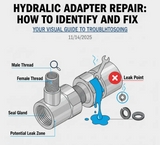
Advanced troubleshooting begins by establishing when a hydraulic connection changes from dry to leaking. Pressure, temperature, machine position and duty cycle create a timeline that often separates a damaged seal from surge, motion or material attack. Changing the fitting before collecting that evidence can erase the cause and leave the replacement exposed to the same load. Make leakage detection
Maintenance

Check Hydraulic Hose Bend Radius in the Installed Motion Envelope

Jul 2nd 2026

Minimum bend radius is a limit for a specific hose construction and size. It is not a target for making every route as tight as possible. An assembly that just meets the limit while parked may fall below it when a cylinder extends, a joint articulates, pressure changes the hose shape, or a clamp shifts the tangent point. The correct review measures the installed hose through its full safe motion e
Connection Types

Protect ORFS Performance by Controlling the O-Ring and Flat Face

Jul 2nd 2026

ORFS fittings place the primary seal at two mating faces, where an O-ring is compressed in a controlled groove. This architecture separates sealing from the straight retaining thread, but it also makes seal handling and face condition decisive. Do not calculate the thread diameter from the dash number ORFS dash designations commonly relate to nominal tube or hose size in sixteenths of an inch. The
Materials

Choose Stainless Hydraulic Fittings for the Exposure, Not the Label

Jul 2nd 2026

Stainless steel can be an excellent material for a hose fitting or adapter, but “stainless” is not a complete specification. Grade, manufacturing condition, connection design, pressure-temperature rating, fluid, external exposure, and mating materials all determine whether it is the right choice. The decision should compare the actual failure mechanism with available materials rather than assume s