HGW Resources

HGW Blog

Practical guides for identifying hydraulic fittings, comparing connection styles, checking applications, reviewing materials, and finding relevant HGW product categories.

Materials

Use Only the Hydraulic Fluid Approved for the Specific Aircraft

HGW Hydraulics on Jul 1st 2026

Aircraft hydraulic fluid is selected as part of the certified or approved system. A familiar military specification, color or commercial product family does not authorize servicing another aircraft. The controlling source is the current maintenance data for the specific aircraft and component. Distinguish the principal chemistry families Petroleum-based fluids include products qualified to MIL-PRF
Maintenance

Use the Damage Pattern to Separate Heat, Abrasion, and Bend Failure in Hydraulic Hose

HGW Hydraulics on Jun 4th 2026

Heat, abrasion, and an over-tight bend can all end in a leak, but they leave different evidence and require different repairs. Replacing the hose without reading that pattern can put an identical assembly back into the same damaging location. Before removing a failed line, photograph the route and mark the hose orientation when safe. Record the machine function, oil and ambient temperature, recent
Materials

Stop Stainless Thread Galling Before the Fitting Begins to Seize

HGW Hydraulics on May 27th 2026

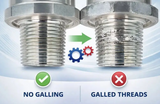
Stainless threads can feel normal for several turns and then lock abruptly. Continuing to apply torque may tear material from one flank to the other, weld microscopic contact points together, and leave both parts unusable. The useful time to prevent galling is before resistance rises, not after the fitting has seized. Galling is adhesive wear under load and sliding. It should be distinguished from
Connection Types

A Temporary Thread Seal Does Not Prove Hydraulic Compatibility

HGW Hydraulics on May 21st 2026

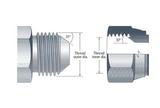
Two hydraulic parts can turn together and even remain dry during a short test while still being incompatible. Sealant, soft-metal deformation or contact at only a few flanks may delay leakage. Compatibility requires the same specified thread and sealing geometry, not temporary pressure retention. Measure more than the included angle Unified and metric fastener-style threads commonly use a 60-degre
Maintenance

A Torque Value Is Valid Only for the Specified Hydraulic Joint Condition

HGW Hydraulics on May 12th 2026

A torque wrench measures applied turning moment. It does not directly measure seal compression, thread preload, flare contact, O-ring squeeze, or remaining strength in a port. The same torque can create different joint conditions when friction, coating, lubrication, material, or assembly history changes. This does not make torque charts useless. It means every value belongs to a defined connection
Materials

Prevent Stainless Thread Galling before Clamp Load Becomes Unstable

HGW Hydraulics on May 6th 2026

Galling is adhesive damage that begins when loaded thread asperities transfer material between mating surfaces. Continued rotation tears and raises the damaged areas until torque increases sharply or the joint seizes. On a hydraulic fitting, that friction change can also make the intended clamp load uncertain before the parts lock. Recognize conditions that raise risk Austenitic stainless threads
Maintenance

Diagnose a Threaded Hydraulic Leak from Its Seal Geometry

HGW Hydraulics on Apr 28th 2026

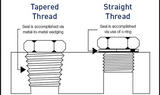
Under-tightening and over-tightening can both contribute to leakage, but torque is not the diagnosis. Hydraulic threads retain several different sealing geometries, and adding force at the wrong interface can permanently damage a port. First identify what is supposed to contain pressure. Inspect tapered pipe threads as a joint NPT uses tapered thread interference plus the specified sealant practic
Maintenance

Apply the Assembly Method That Matches Each Hydraulic Seal

HGW Hydraulics on Apr 23rd 2026

Tightening creates clamp load or thread engagement; it does not create the same kind of seal in every hydraulic connection. Some procedures use torque, others specify turns, flats, engagement or a gauged position. The method must match the connection, material, coating and assembly state. Friction changes the meaning of torque Only part of applied torque becomes useful clamp load. Thread finish, p
Maintenance

Build Hydraulic Contamination Control Around Representative Samples

HGW Hydraulics on Apr 8th 2026

Contamination control fails when a laboratory number is treated as the entire program. The result is meaningful only if the sample represents the operating fluid, the target fits the most sensitive component, and a defined response follows an out-of-limit result. Particles, water, air, degraded additives, wear metals, and process fluids require different detection and treatment. A strong program s
Fitting Guides

Use a Custom Hydraulic Fitting Only After Defining the Leak Mechanism

HGW Hydraulics on Apr 2nd 2026

A custom fitting can replace an awkward adapter stack, resolve clearance or align unlike approved interfaces. It should not be the first response to an unidentified leak. If a damaged seat, hose tension or wrong O-ring caused the problem, a special body can reproduce it at higher cost. Document where pressure escapes Clean the area and identify the actual sealing interface: tapered thread, flare,