HGW Resources

HGW Blog

Practical guides for identifying hydraulic fittings, comparing connection styles, checking applications, reviewing materials, and finding relevant HGW product categories.

Fitting Guides

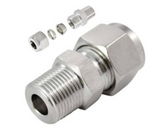
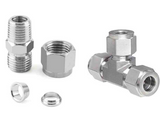
Instrumentation Tube Fitting Selection Starts with the Tube Specification

HGW Hydraulics on Oct 21st 2025

An instrumentation fitting cannot make an undefined tube reliable. The tube supplies the surface that ferrules grip and seal, the wall that carries pressure, and the material exposed to the fluid and environment. Selection should therefore begin with tube alloy, outside diameter, wall, hardness, surface condition, and dimensional tolerance. Only then can a compatible fitting, ferrule system, press
Connection Types

Hydraulic Fitting Standards by Seal Location: A Buyer’s Map

HGW Hydraulics on Oct 16th 2025

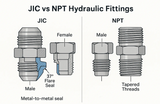
Hydraulic fitting standards are easier to compare when grouped by seal location. Threads may wedge and seal, clamp a metal flare, compress an O-ring, hold a cone seat, retain a ferrule, or secure a flange. Two parts with similar thread diameter can fail because their fluid boundaries are different. Use this map to identify candidates, then confirm exact standard, size, material, rating, and mating
Maintenance

Reducing Hydraulic Energy Loss Before Adding New Sustainability Technology

HGW Hydraulics on Oct 8th 2025

The most sustainable hydraulic improvement is often eliminating energy that the machine never needed to consume. Continuous relief flow, oversized pumps, excessive throttling, internal leakage, high line loss, and poor control can waste power before renewable electricity, heat recovery, or regenerative hardware is considered. Start with a measured energy balance across the actual duty cycle, then
Fitting Guides

Hydraulic Flow Rate, Line Velocity, and Actuator Speed Are Three Different Checks

HGW Hydraulics on Oct 2nd 2025

Flow rate is fluid volume per unit time. Line velocity is the average speed of that volume through a passage. Actuator speed is the motion of a cylinder or motor created by flow and actuator displacement. Treating the three as synonyms can produce undersized hoses, excessive pressure loss, slow motion, or damaging inlet conditions. The design must satisfy all three under the machine’s duty cycle.
Maintenance

Locating Harmful Backpressure in Hydraulic Return, Drain, and Exhaust Paths

HGW Hydraulics on Sep 23rd 2025

Backpressure is pressure opposing the intended flow path. Some circuits use controlled downstream pressure for load control or valve function. Harmful backpressure appears where a component expects a low-pressure return, case drain, pilot drain, tank line, or exhaust path and instead sees resistance that changes its behavior. The diagnosis requires two locations and a flow condition—not a single g
Maintenance

Interpret Hydraulic Fitting Burst Tests as Assembly Evidence

HGW Hydraulics on Sep 17th 2025

A burst result belongs to the specimen that was tested. It does not create a universal pressure rating for every size, alloy or connection in the same product family. The useful evidence is the complete record: components, assembly method, test procedure, pressure trace and failure location. Separate working, proof, and burst conditions Working pressure is the permitted service limit established b
Applications

Configure Power-Plant Instrument Valves Around the Measurement Task

HGW Hydraulics on Sep 9th 2025

An instrument valve in a power facility may isolate a pressure transmitter, direct a sample, vent trapped fluid or equalize a differential measurement. The correct configuration comes from that operating task and the process condition at the tap, not from choosing a two-way or three-way body in isolation. Define the valve function and normal state List every port, flow path and required operating
Fitting Guides

Measure Push-to-Connect Labor Savings Without Expanding the Application

HGW Hydraulics on Sep 4th 2025

Push-to-connect fittings can reduce assembly time on approved small-tube circuits. The saving comes from a repeatable cut-and-insert process, not from eliminating tube preparation or application review. Before comparing labor cost, separate a push-in tube fitting from a quick-disconnect hose coupling or a safety breakaway. Similar marketing names describe different retention, valve and pressure fu
Materials

Read Fitting Alloy Names as Compositions, Conditions, and Processes

HGW Hydraulics on Aug 27th 2025

Brass, carbon steel and alloy steel describe different material families. Their useful properties come from controlled composition, processing and final condition; manufacturers do not simply add one element to a generic steel and receive a guaranteed result. For a hydraulic fitting, material identification must be tied to the product geometry, manufacturing route, heat treatment and applicable sp
Fitting Guides

Design a Hydraulic Circuit from Energy Demand to Safe Maintenance

HGW Hydraulics on Aug 21st 2025

Hydraulic system design begins with the work an actuator must perform, not with a list of available pumps and fittings. Load, speed, duty and control response establish flow and pressure demand; every later component must support that operating envelope. A maintainable circuit turns those calculations into a route that can be isolated, inspected and repaired safely. Define the motion and credible