HGW Resources

HGW Blog

Practical guides for identifying hydraulic fittings, comparing connection styles, checking applications, reviewing materials, and finding relevant HGW product categories.

Maintenance

Diagnose a Threaded Hydraulic Leak from Its Seal Geometry

HGW Hydraulics on Apr 28th 2026

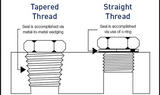
Under-tightening and over-tightening can both contribute to leakage, but torque is not the diagnosis. Hydraulic threads retain several different sealing geometries, and adding force at the wrong interface can permanently damage a port. First identify what is supposed to contain pressure. Inspect tapered pipe threads as a joint NPT uses tapered thread interference plus the specified sealant practic
Maintenance

Apply the Assembly Method That Matches Each Hydraulic Seal

HGW Hydraulics on Apr 23rd 2026

Tightening creates clamp load or thread engagement; it does not create the same kind of seal in every hydraulic connection. Some procedures use torque, others specify turns, flats, engagement or a gauged position. The method must match the connection, material, coating and assembly state. Friction changes the meaning of torque Only part of applied torque becomes useful clamp load. Thread finish, p
Maintenance

Build Hydraulic Contamination Control Around Representative Samples

HGW Hydraulics on Apr 8th 2026

Contamination control fails when a laboratory number is treated as the entire program. The result is meaningful only if the sample represents the operating fluid, the target fits the most sensitive component, and a defined response follows an out-of-limit result. Particles, water, air, degraded additives, wear metals, and process fluids require different detection and treatment. A strong program s
Maintenance

Six Inspection Zones That Determine Hydraulic Hose Safety

HGW Hydraulics on Mar 3rd 2026

Hydraulic hose safety is not created by adding one sleeve to every line. The assembly has to be correct for the fluid and operating envelope, routed without harmful stress, protected from its actual surroundings, and inspected before damage reaches reinforcement or a coupling. A useful review divides the installation into six zones. Each zone answers a different question and can require a differen
Maintenance

Investigating Hydraulic Hose Damage Before Selecting a Guard or Sleeve

HGW Hydraulics on Feb 26th 2026

A burst hose and a worn outer cover are end conditions, not root causes. Installing a sleeve over the replacement may be appropriate, but it will not correct excessive pressure, a tight bend, incompatible fluid, a damaged fitting, or a route that forces the hose across a sharp edge. A defensible repair begins with evidence from the failed assembly and its installation. Preserve that evidence long
Maintenance

Prevent Hydraulic Leaks by Following Energy, Oil, and Load Paths

HGW Hydraulics on Feb 18th 2026

A hydraulic leak is usually the visible end of a longer change in the system. Contamination may damage a valve and raise heat; heat may harden a seal; a misrouted hose may pull on the fitting where oil finally appears. Inspection is more useful when it follows those relationships instead of treating every checklist item as isolated. Establish a safe and clean inspection state Use the machine-speci
Maintenance

Reading Hydraulic Foam as Evidence of Where Air Enters the Circuit

HGW Hydraulics on Jan 13th 2026

Foam in a hydraulic reservoir is visible evidence, not a complete diagnosis. The bubbles may come from air pulled through a suction-side leak, a return line discharging poorly, contaminated or degraded oil, an incorrect fluid level, or air that cannot escape before the pump draws it back into circulation. Replacing oil without locating the air path can make the reservoir look better briefly while
Maintenance

Do Not Transfer Set Ferrules to New Instrumentation Tube

HGW Hydraulics on Jan 8th 2026

Instrumentation ferrules change shape when a tube fitting is first pulled up. That controlled movement establishes contact with the tube and fitting body. Once set, loose ferrules should not be removed and treated as new parts for another tube. This rule must be distinguished from remaking a connection. Some fitting systems permit an already assembled tube end, with its original ferrules still set
Maintenance

Measuring Hydraulic GPM at the Function That Is Actually Slow

HGW Hydraulics on Dec 31st 2025

A pump catalog may list a flow rate, but that number does not prove how many gallons per minute reach a cylinder on a warm machine under load. Real circuit flow changes with pump speed, displacement control, internal leakage, valve position, fluid condition, and the pressure losses between the measurement point and the actuator. The useful question is not simply “What is the system GPM?” It is “Wh
Maintenance

Maintain a Hose Crimper through Cleanliness, Lubrication, and Calibration

HGW Hydraulics on Dec 25th 2025

A hose crimper does more than move dies. It must repeatedly produce the specified finished diameter or other acceptance condition for a qualified hose-and-coupling system. Maintenance should therefore protect both machine life and assembly accuracy. Lubrication is one control, not a universal product recommendation. Follow the machine's lubrication map Identify slide surfaces, master dies, pi