HGW Resources

HGW Blog

Practical guides for identifying hydraulic fittings, comparing connection styles, checking applications, reviewing materials, and finding relevant HGW product categories.

Materials

Stainless Tube Bending Methods: Controlling Flattening, Wrinkles, and Springback

Oct 19th 2022

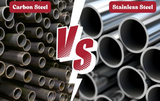
Bending stainless tube changes more than its direction. Material on the outside of the bend stretches and becomes thinner, material on the inside compresses and can wrinkle, and the cross-section tends to flatten. After the tooling releases, elastic recovery opens the angle through springback. A successful bend keeps those changes within the limits required by the assembly. The method depends on t
Materials

How Forging and Casting Shape Stainless Steel Components

Oct 13th 2022

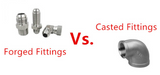
Forging and casting describe how a stainless steel component takes shape, not the complete quality of the finished part. Forging deforms solid metal with compressive force. Casting fills a mold with molten alloy and allows it to solidify. Those different thermal and mechanical histories influence grain flow, possible defects, shape complexity, machining, cost, and inspection. Neither process is au
Materials

Compare Stainless and Carbon Steel Adapter Life Without a Fixed Multiplier

Sep 1st 2022

No defensible rule says that a stainless hydraulic adapter will always last a fixed number of times longer than a carbon-steel part. Service life changes with alloy, coating system, salt concentration, temperature, deposits, chemical exposure, installation damage, and maintenance. The useful comparison begins with the corrosion mechanism at the actual connection. Carbon steel life depends on its s
Materials

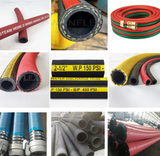
Specify Coolant Hose from Fluid Chemistry, Temperature, and Fitting Materials

HGW Hydraulics on Aug 4th 2022

A line carrying engine coolant or process coolant should not be specified from a hydraulic-oil hose description alone. Water, glycol, inhibitors, contamination, and temperature cycling create a different compatibility problem from petroleum hydraulic fluid. The complete assembly has to be evaluated as a coolant component. Begin with the actual coolant formulation Record the coolant type, water-to-
Materials

Choose Carbon Steel or Stainless Adapters from the Actual Corrosion Mechanism

HGW Hydraulics on Jul 12th 2022

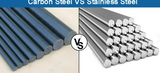
Carbon steel and stainless adapters can both perform reliably when their material and surface system match the fluid and environment. Stainless is not automatically ten times longer-lived, and carbon steel does not begin corroding quickly in every controlled location. Separate external and internal exposure Humidity, road salt, seawater spray, fertilizer, washdown, mine water, and chemicals attack
Materials

Choose Pneumatic Tube and Hose Materials from Motion, Media, and Environment

HGW Hydraulics on Dec 29th 2021

Pneumatic conductors carry compressed air between preparation equipment, valves, cylinders, grippers and tools. Material selection affects not only pressure capacity but also how the line bends, grips in a fitting, resists condensate and survives the machine environment. The same polymer name can cover multiple grades and constructions, so final limits must come from the exact tube or hose datashe
Materials

Choose a High-Performance Alloy from the Specific Corrosion or Heat Mechanism

HGW Hydraulics on Apr 21st 2021

“Superalloy” and “specialty alloy” cover materials designed for different combinations of corrosion, oxidation, strength and temperature. A high purchase price or nickel content does not make one family the best choice for every harsh environment. Selection starts with the failure mechanism, then identifies an exact grade, product form and fabricated condition. Start with the environment rather th
Materials

Decide Between Forged and Brazed Fittings from Geometry and Qualification

HGW Hydraulics on Mar 31st 2021

Forging and brazing are different ways to create a fitting body. Forging reshapes a solid workpiece, while brazing joins prepared components with a filler metal. Neither process name alone establishes pressure rating, fatigue life, leak performance, or cost. The right choice depends on geometry, alloy, joint loads, production volume, process control, and verification of the finished component. For