HGW Resources

HGW Blog

Practical guides for identifying hydraulic fittings, comparing connection styles, checking applications, reviewing materials, and finding relevant HGW product categories.

Materials

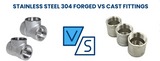
Compare Forged and Cast Fitting Bodies from Finished-Part Evidence

HGW Hydraulics on Nov 28th 2023

Forging and casting create different starting structures, but the process name alone does not establish a fitting's strength, pressure rating or service life. Alloy, heat treatment, geometry, defect control, machining and finished-part qualification determine whether a component is suitable. The useful comparison identifies each process's risks and the evidence used to control them. Foll

Materials

Choose Brass or Polymer PEX Fittings from Bore, Water Chemistry, and Listing

Nov 14th 2023

Brass and polymer insert fittings can both be correct for PEX piping. The choice is not a contest between metal strength and plastic price. It depends on the joining system, actual flow passage, water chemistry, temperature and pressure, exposure, local code, and the product listing for the intended service. Identify the PEX joining system first PEX is cross-linked polyethylene tube used in water
Materials

Specify Brass Fittings by Connection Style, Alloy, and Service Approval

HGW Hydraulics on Nov 1st 2023

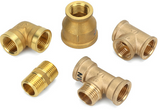
Brass is easy to machine and form, conducts heat and electricity, and resists corrosion in many environments. Those properties support a broad fitting range, but they do not give every brass connector the same pressure, temperature, fluid compatibility, or regulatory approval. Start with the connection style and exact service. Pipe-thread brass fittings need a defined seal Straight adapters, elbow
Materials

Choose Stainless or Carbon Steel Hose Ends from the Exposure Map

Oct 11th 2023

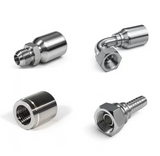
Stainless steel does not automatically last ten or twenty years, and carbon steel does not automatically need replacement after a short interval. Hose-end life depends on the alloy or coating, internal fluid, external exposure, deposits, temperature, installation damage, seal, hose movement, and inspection. An exposure map is more defensible than a material slogan. Separate the bore environment fr
Materials

Divide a Hydraulic Circuit into Rigid Tube Zones and Flexible Hose Zones

Mar 30th 2023

Most hydraulic systems do not need a winner between stainless tube and hose. They need boundaries: rigid lines where geometry should remain fixed, flexible assemblies where components move or vibration must be isolated, and controlled transitions between the two. That zone-based approach is more useful than assigning the entire circuit to one material. Locate every source of relative movement Mark
Materials

Stainless Steel Hose Fittings and Adapters: When They Make Sense

Mar 21st 2023

Stainless steel hose fittings and adapters are used when the system needs more than basic connection hardware. The added value is usually durability, corrosion resistance, cleanability, or longer service life in a demanding environment. Other materials such as carbon steel, brass, aluminum, and plastic can be right in many applications. Stainless steel makes sense when the operating conditions jus
Materials

304 vs 316 Stainless Hose Ends: Chlorides, Corrosion, and Selection

Jan 24th 2023

304 and 316 are both austenitic stainless steel families used for fittings and fluid-system components. Their shared chromium content supports formation of a passive oxide film. The practical difference is that 316 normally includes molybdenum, which improves resistance to pitting and crevice corrosion in many chloride environments. That advantage is meaningful, but grade selection still depends o
Materials

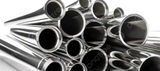
Stainless Pipe vs Tube: Ordering Language, Dimensions, and Applications

Jan 11th 2023

Stainless pipe and stainless tube can come from similar alloys and manufacturing routes, but they are ordered through different dimensional systems. Pipe is commonly specified by Nominal Pipe Size and schedule. Tube is commonly specified by actual outside diameter and wall thickness. That language determines which fittings, calculations, and tolerances apply. The difference is not simply that pipe
Materials

Selecting Stainless Pipe, Fittings, and Adapters as One Corrosion System

Dec 13th 2022

Stainless pipe does not become a corrosion-resistant system until its fittings, adapters, seals, welds, and external environment are considered with it. A 316 pipe connected through an unsuitable adapter or contaminated during fabrication can fail at the joint even when the straight pipe remains sound. Selection therefore begins with the fluid and exposure, then carries one material and connection
Materials

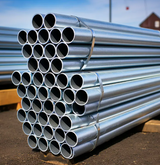
How Zinc Coating Protects Steel Pipe—and How Galvanized Systems Age

HGW Hydraulics on Nov 24th 2022

Galvanized pipe is steel protected by a zinc coating. The coating delays attack on the steel through a combination of barrier protection and sacrificial corrosion. That protection is useful, but it is finite. Coating thickness and continuity, water or process chemistry, wet-dry exposure, temperature, flow, deposits, and contact with other metals all influence how the system ages. This makes galvan