HGW Resources

HGW Blog

Practical guides for identifying hydraulic fittings, comparing connection styles, checking applications, reviewing materials, and finding relevant HGW product categories.

Maintenance

Hydraulic Pump Symptoms: What Noise, Heat, Slow Motion, and Contamination Can Mean

HGW Hydraulics on Jan 2nd 2025

Noise, heat, slow motion, and foaming oil are often described as pump failures. They are warning signs, not diagnoses. A healthy pump can sound abnormal when its inlet is restricted, fluid is too viscous, air enters a suction connection, or a valve sends flow across a restriction. Replacing the pump without finding that condition can damage the replacement. Start with equipment data and a safe tes
Fitting Guides

Diagnose Back Ferrule Damage from Tube Grip, Motion, and Assembly Evidence

HGW Hydraulics on Dec 24th 2024

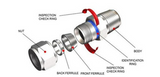
A back ferrule is one part of a precision tube-fitting system. Its exact job varies with the design, but it commonly contributes tube grip and load control while the front ferrule establishes the primary seal. Damage at the back ferrule is evidence to investigate, not proof that all dual-ferrule connections are unreliable. Before replacing pieces, preserve the component order, tube location and op
Maintenance

Reduce Hydraulic Ownership Cost with Condition-Based Decisions

HGW Hydraulics on Dec 18th 2024

Hydraulic maintenance lowers ownership cost when measurements lead to timely decisions. A long checklist that produces no trend, threshold or work order only adds labor. Build a small set of reliable observations around the system’s likely failure mechanisms and connect each result to an action. Fluid and hardware must be managed together. Contaminated or overheated oil damages components, while w
Maintenance

Build a Hydraulic PM Program from Hazards, Failure Modes, and Trends

HGW Hydraulics on Dec 10th 2024

A useful hydraulic preventive-maintenance program is a set of machine-specific decisions, not a generic calendar. It connects safe access, known failure modes, fluid condition and inspection evidence to tasks that can be repeated and audited. Start with the equipment instructions and operating environment, then adjust task intervals through documented condition trends rather than guesswork. Define
Maintenance

Turn Early Hydraulic Defects into Scheduled Corrective Work

HGW Hydraulics on Dec 5th 2024

Corrective maintenance should begin when evidence shows a component is degrading, not only after the machine stops. A seep, temperature trend, damaged hose cover or recurring filter alarm can become planned work if the observation is recorded with enough detail to make a decision. The objective is to restore the function and remove the condition that shortened component life. Merely exchanging the
Maintenance

A Hydraulic Troubleshooting Record That Separates Symptoms from Causes

HGW Hydraulics on Nov 27th 2024

Hydraulic troubleshooting becomes expensive when a technician replaces the component nearest the symptom. Slow motion can come from load, low flow, internal leakage, a valve state, fluid viscosity, or a control signal. Heat can come from throttling, relief flow, leakage, or cooling loss. The visible part is not necessarily the cause. A repeatable process separates observation, system logic, measur
Maintenance

Why Tightening a Live Hydraulic Leak Is Not a Maintenance Shortcut

HGW Hydraulics on Nov 21st 2024

A leaking hydraulic connector creates pressure to restore production quickly. Tightening it while the machine remains energized may seem efficient because the technician can watch for the drip to stop. That shortcut places a person beside a loaded component at the exact moment additional wrench force is applied. The safer process isolates energy, establishes stable access, diagnoses the connection
Materials

Use Stainless Hydraulic Fittings Where Corrosion Control Justifies Them

HGW Hydraulics on Oct 29th 2024

Stainless steel can solve a difficult hydraulic corrosion problem, but it cannot correct a mismatched thread, damaged seal or underrated assembly. The purchasing decision should begin with the connection and service conditions, then determine whether a stainless grade provides value over coated carbon steel or another approved material. Map the connection before selecting the alloy Straight adapte
Materials

Choose Brass or Stainless Fittings from the Actual Failure Environment

HGW Hydraulics on Oct 24th 2024

Brass and stainless steel are alloy families, not single performance grades. A material decision should name the exact alloy and then connect it to fluid chemistry, external exposure, pressure, temperature, cleaning method and the consequence of a leak. Brass may be the efficient choice for a controlled utility line. Stainless may earn its added fabrication cost in a corrosive or cleanliness-sensi
Connection Types

Identify Hydraulic Fittings by Seal, Thread, Standard, and Port

HGW Hydraulics on Oct 9th 2024

Hydraulic connections that share a nominal size may seal in entirely different places. A reliable identification begins at the sealing surface, then works outward through the thread, tube or hose interface, body shape, material and applicable standard. This order prevents a common purchasing error: finding a thread that starts into a port and assuming the connection is compatible. First locate the