HGW Resources

HGW Blog

Practical guides for identifying hydraulic fittings, comparing connection styles, checking applications, reviewing materials, and finding relevant HGW product categories.

Materials

Qualify Welded 304 or 316 Stainless Tube by Seam Process and Service

HGW Hydraulics on Oct 3rd 2024

Welded stainless tube can be an efficient choice for long runs, consistent dimensions and commonly stocked sizes. Its suitability is established by the material standard, seam manufacturing controls and completed-tube testing, not by a simple rule that welded construction is low pressure. Before comparing 304 with 316, define what the tube will carry, how it will be fabricated and what the install
Materials

Specify Seamless 304 or 316 Stainless Tube from the Service Conditions

HGW Hydraulics on Sep 17th 2024

Choosing seamless stainless tube starts with the fluid, environment and governing product specification. The absence of a longitudinal weld describes how the tube was made; it does not by itself establish pressure capability, cleanliness or corrosion life. Grade selection is only one part of the purchase description. Outside diameter, wall thickness, tolerance, heat treatment, surface condition, t
Materials

Select Hose-End Steel by Crimp Formability and Corrosion Exposure

HGW Hydraulics on Sep 11th 2024

Hose-end material has to survive two different jobs: controlled deformation or retention during assembly and long-term exposure on the machine. Carbon steel and stainless steel can both support hydraulic hose ends when the exact stem, ferrule, hose, crimp, environment, and connection are qualified. Evaluate the stem and ferrule as manufactured parts Steel chemistry, heat treatment, forming, machin
Fitting Guides

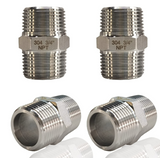
Choose a Stainless Pipe Nipple by End Preparation and Wrench Access

HGW Hydraulics on Sep 3rd 2024

A pipe nipple is a short tubular connector, but its useful identity includes end preparation, overall length, unthreaded center, bore, material, schedule or wall, and wrench access. Two male threads do not guarantee a seal or pressure rating. The nipple and both female components must follow the same specified pipe-thread system and service limits. Barrel nipples leave a usable center section A ba
Applications

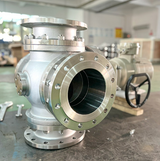
Specify Stainless Valves from Process Chemistry, Pressure Class, and Seat Design

HGW Hydraulics on Aug 29th 2024

A stainless valve is not selected from the body material alone. The ball, stem, seat, packing, seals, fasteners, end connections, actuator, and cavity all contact the process or environment in different ways. The valve must also perform its required shutoff, throttling, isolation, cleaning, and safety function. Write the process envelope first Record fluid or gas composition, concentration, solids
Materials

Passivating Machined Stainless Parts: Cleaning, Acid Treatment, Rinsing, and Verification

HGW Hydraulics on Aug 21st 2024

Stainless steel already depends on a chromium-rich passive film for corrosion resistance. Machining, grinding, forming, welding, and handling can leave free iron, shop soil, scale, or heat tint on that surface. Passivation is a controlled chemical treatment used after proper cleaning to remove susceptible contamination and support a clean passive condition. It is not a plating layer and it cannot
Materials

Understanding 304, 316, Low-Carbon, and Super-Austenitic Stainless Grades

HGW Hydraulics on Aug 15th 2024

The 300 series contains austenitic chromium-nickel stainless steels used across fabricated equipment, tubing, fittings, food machinery, chemical systems, architecture, and general industry. 304 and 316 are the best-known grades, but their usefulness comes from alloy chemistry, processing, surface condition, and environment—not from a universal “surgical” or “marine” label. Grade selection should i
Applications

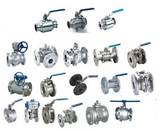
Selecting Stainless Steel Ball Valves for Industrial Fluid Service

HGW Hydraulics on Aug 6th 2024

A ball valve controls flow by rotating a bored sphere between seats. When the bore aligns with the piping, the passage is open; a quarter turn places solid ball surface across the route and closes it. This compact action makes ball valves common for isolation and switching, but it does not make every stainless valve suitable for every industrial fluid. Selection needs a full pressure-temperature-m
Materials

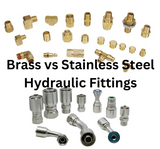
Corrosion Review for Brass and Stainless Hydraulic Fittings

HGW Hydraulics on Jul 31st 2024

Calling brass and stainless “rust-resistant” is useful only as a first distinction from unprotected carbon steel. Brass does not produce iron oxide, but it can lose zinc or crack. Stainless forms a passive chromium oxide film, but it can pit or corrode in crevices. A reliable hydraulic material review names the actual degradation mechanism. That review should cover conveyed fluid, external environ
Materials

Choosing Brass or Stainless Components for High-Pressure Hydraulic Service

HGW Hydraulics on Jul 23rd 2024

High-pressure hydraulic service cannot be assigned to a material name alone. Stainless steel often supports demanding component designs, while brass is used successfully in specific valves, instruments, and fittings. The allowable pressure comes from the exact product geometry, alloy, manufacturing method, size, temperature, seal, and test standard. The first question is therefore not “which metal