HGW Resources

HGW Blog

Practical guides for identifying hydraulic fittings, comparing connection styles, checking applications, reviewing materials, and finding relevant HGW product categories.

Maintenance

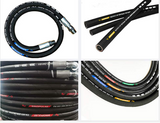
Match Hydraulic Hose Protection to Abrasion, Heat, Bend, and Line-of-Sight Risk

HGW Hydraulics on Feb 29th 2024

Hose protection should address a known external hazard without hiding damage, trapping heat, restricting movement, or forcing the assembly below minimum bend radius. No sleeve or guard upgrades an incorrectly rated hose or repairs an assembly whose reinforcement, cover, or coupling is already damaged. Map the hazard along the hose route Observe the equipment through its full motion. Mark rub point
Materials

Protective Finishes on Hydraulic Fittings: From Surface Preparation to Service Life

HGW Hydraulics on Feb 20th 2024

A plated hydraulic fitting is a layered component. The base alloy carries mechanical load, surface preparation creates adhesion, and the finish controls how the exterior responds to corrosion, wear, handling, appearance, or another required property. Selecting a coating by color alone ignores that system. The useful specification connects substrate, process, coating material, thickness, conversion
Fitting Guides

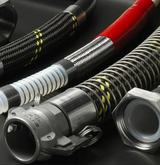
Hydraulic Quick Couplers: Locking, Internal Valves, Pressure, and Safe Disconnection

HGW Hydraulics on Feb 14th 2024

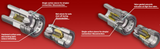
Hydraulic quick couplers let a hose or tool be connected without assembling a threaded joint each time. A plug enters a socket, a locking mechanism retains it, seals contain the fluid, and internal valves—when present—open to create a flow path. The convenience depends on correct series matching and safe pressure control. Two halves that look similar may have different profiles, seals, valve mecha
Applications

Choose Hydraulic or Pneumatic Power from Load, Motion, and Facility Energy

HGW Hydraulics on Feb 6th 2024

Hydraulics and pneumatics both transmit energy through fluid, but liquid and compressed gas respond differently. The useful decision begins with required force, speed, position behavior, duty cycle, environment, and the energy sources already available at the facility. Neither technology is automatically cleaner, safer, cheaper, or more precise in every design. Convert the motion requirement into
Materials

Recheck Hydraulic Fluid Compatibility Whenever Formulation or Temperature Changes

HGW Hydraulics on Feb 1st 2024

Material compatibility is not established by a broad fluid label such as hydraulic oil, water-glycol, solvent, or synthetic. Additives, concentration, contamination, temperature, pressure, exposure time, and cleaning chemicals can change how a hose, seal, coating, or fitting behaves. The compatibility record should name the actual formulation used in the machine. Map every wetted and externally ex
Applications

Translate an Urgent ORB Manifold Request into a Controlled Drawing

Jan 24th 2024

An urgent custom manifold request is not solved by copying a sketch directly into production. The fastest reliable route is to convert the equipment need into a controlled interface drawing, identify the high-risk dimensions, and agree on inspection before material is cut. Lead time should be quoted from the confirmed scope rather than promised from a previous project story. Capture the function o
Fitting Guides

Instrumentation Valve Selection by Function, Isolation Plan, and Process Conditions

HGW Hydraulics on Jan 18th 2024

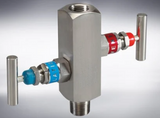
Instrumentation valves do more than open and close a small line. They isolate instruments, meter samples, prevent reverse flow, route test connections, and create controlled bleed paths. The right valve begins with the process function and failure consequence, then moves to materials, sealing, actuation, and port details. A catalog pressure value cannot replace this system definition. Pressure flu
Materials

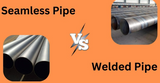
Compare Welded and Seamless Instrument Tubing from the Required Product Standard

HGW Hydraulics on Jan 9th 2024

Welded and seamless tubing are manufacturing routes, not automatic rankings of quality or pressure. Either can serve instrumentation duty when the exact tube standard, dimensions, material condition, manufacturing controls, inspection, and fitting system meet the process requirements. Begin with the service and governing code Record fluid or gas, design and operating pressure, temperature, corrosi
Fitting Guides

Using STAMP to Define a Hydraulic Fitting Before Ordering

HGW Hydraulics on Jan 3rd 2024

STAMP is a compact way to collect the conditions a hydraulic fitting must satisfy: size, temperature, application, media, and pressure. It does not select a part automatically. It prevents the buyer from choosing by thread label while leaving the tube, seal, environment, or pressure cycle undefined. Use STAMP at the system boundary where the fitting will be installed. Record the two mating compone
Applications

Place ORFS Where It Removes Adapters and Preserves Instrument Accuracy

HGW Hydraulics on Dec 26th 2023

ORFS is most useful when a flat O-ring face can connect a hose or tube directly to the component and remove unnecessary conversions. Fewer adapters can reduce installed length and the number of joints, but only when the meter, valve or equipment port is actually available and qualified with that interface. The connection choice must preserve the component's hydraulic function as well as conta