HGW Resources

HGW Blog

Practical guides for identifying hydraulic fittings, comparing connection styles, checking applications, reviewing materials, and finding relevant HGW product categories.

Connection Types

How JIC 37-Degree Flare Connections Clamp, Seal, and Fail

HGW Hydraulics on Aug 3rd 2023

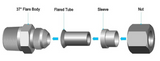
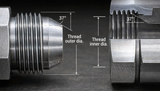
JIC is a widely used industrial hydraulic connection built around a 37-degree metal flare. A straight-thread nut pulls matching male and female seats together; fluid containment occurs at that conical contact rather than in the threads. This separation makes the joint inspectable and serviceable, but it does not make every 37-degree-looking fitting interchangeable. Standard, size, surface conditio
Connection Types

A Five-Check Method for Measuring Unknown JIC Fittings

HGW Hydraulics on Jul 25th 2023

JIC size cannot be confirmed from a single diameter. A correct identification links the 37-degree sealing seat, straight thread diameter, thread pitch, dash size, and mating component. Missing any one of those checks can turn an “almost fit” into a damaged flare or wrong order. Use clean samples and proper gauges. If the fitting came from a machine, document its location and the opposite end befor
Fitting Guides

Hydraulic Adapter Selection Starts with Two Complete Connection Definitions

Jul 19th 2023

A hydraulic adapter is the boundary between two connection systems. It may change thread family, nominal size, sealing method, direction, or branching. Choosing one by wrench size or port diameter ignores the two surfaces that must retain pressure. The practical selection method is to write a complete definition for end A and end B, then evaluate the body between them. This separates interface com
Connection Types

Decode BSP Fittings from Thread Form to the Actual Sealing Surface

HGW Hydraulics on Jul 11th 2023

BSP identifies a British pipe-thread family. It does not identify pressure rating, fitting material, or one universal way to seal. Buyers need to separate the parallel and tapered forms, then document the face, washer, cone, O-ring, or thread interference that the specific component uses. That process matters in the United States because imported pumps, valves, cylinders, coolers, sensors, and att
Connection Types

BSPP and BSPT Connections: Same Pipe Family, Different Seal Locations

Jul 6th 2023

BSPP and BSPT share the British pipe-thread family and a 55-degree Whitworth form, but they do not create a seal in the same way. BSPP has parallel threads and normally relies on a washer, O-ring, cone, or face. BSPT uses tapered engagement and the specified thread-sealing practice. That means an installer must identify more than nominal BSP size. The port shape and sealing component determine whe
Connection Types

NPT or BSP: Identify the Thread Family and Seal Before Replacement

HGW Hydraulics on Jun 28th 2023

Imported machinery often puts an unfamiliar pipe fitting beside parts stocked for U.S. equipment. NPT and British Standard Pipe connections may appear close, but their thread profiles and sealing arrangements were developed under different standards. A part that turns a few threads is not proof of compatibility. Replacement begins by splitting “BSP” into BSPP and BSPT. NPT is tapered. BSPT is also
Connection Types

Identifying NPT, BSPT, and BSPP Connections Without Forcing a Fit

HGW Hydraulics on Jun 22nd 2023

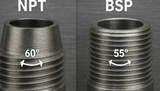
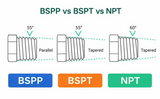
NPT, BSPT, and BSPP pipe connections can look close enough for the wrong parts to begin engaging. They are not one interchangeable family. NPT uses an American 60-degree tapered thread. BSPT uses a British 55-degree tapered Whitworth form. BSPP uses a 55-degree parallel thread and depends on a separate sealing feature defined by the connection. The risk is greatest during replacement work, when a
Connection Types

NPSM vs NPT: Mechanical-Seat Swivels and Tapered-Thread Ports

Jun 13th 2023

NPSM and NPT can share nominal pipe sizes and thread pitch, yet they solve different connection problems. NPSM uses a straight thread in a mechanically seated arrangement, often a female hose swivel. NPT uses a tapered thread that wedges into a matching port and normally relies on approved sealant. The decisive question is not whether a nut begins to turn. It is where the finished joint is designe
Connection Types

NPT Hydraulic Connections: Taper, Sealant, Measurement, and Failure Limits

Jun 7th 2023

National Pipe Taper remains common in U.S. fluid systems because a threaded fitting can connect directly to a compatible tapered port. Its apparent familiarity is also a source of errors: nominal size is mistaken for measured diameter, sealant is applied without contamination control, and tightening is used to compensate for damaged or mismatched threads. NPT performance comes from a complete join
Connection Types

NPT and NPTF Compatibility: Why Thread Engagement Does Not Prove a Seal

May 30th 2023

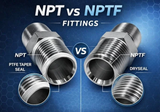
NPT and NPTF fittings can have the same nominal size, pitch, taper, and 60-degree thread form. That physical similarity sometimes allows mixed parts to engage, but engagement alone does not establish a reliable or specification-compliant seal. The important difference is the way thread tolerances and crest-root contact are controlled. NPT normally uses a suitable thread sealant. NPTF is a Dryseal